

Places to visit in Baku, Azerbaijan
30 places to visit in Baku, Azerbaijan, each with LOQAH's carefully crafted stamp of its own: Gobustan National Park, Gobustan Rock Art, Maiden Tower and more. Stand at any of them with the app open and the stamp is yours, confirmed on site, in your Baku volume.
5 UNESCO World Heritage sites · 1 Heritage site · 2 Famous places to visit · 22 Hidden gems
UNESCO World Heritage sites in Baku (5)
-
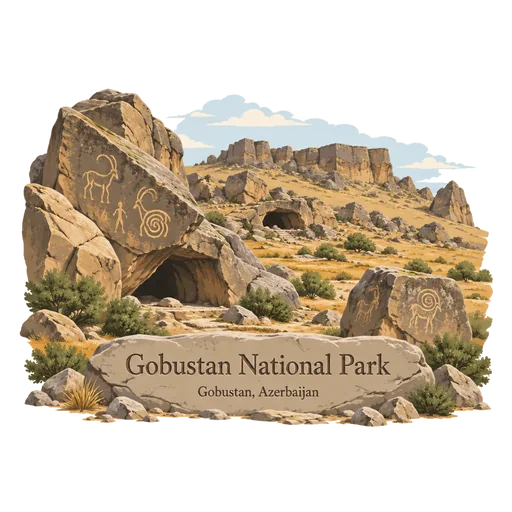
Gobustan National Park
A protected reserve of rocky hills about 70 kilometres southwest of Baku, holding more than 6,000 rock engravings made over several thousand years. It also has caves, ancient settlement sites and small mud volcanoes, and is a UNESCO World Heritage Site.
-
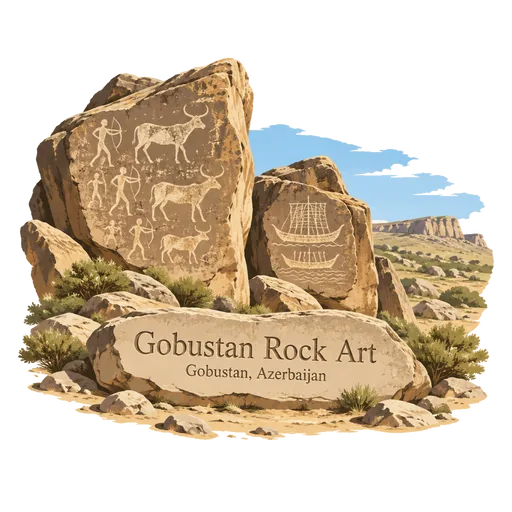
Gobustan Rock Art
A UNESCO listed landscape of petroglyphs on the boulders of the Gobustan plateau, showing hunters, animals, dancing figures and reed boats. The carvings span roughly 40,000 years, and a small museum at the entrance explains the main panels.
-
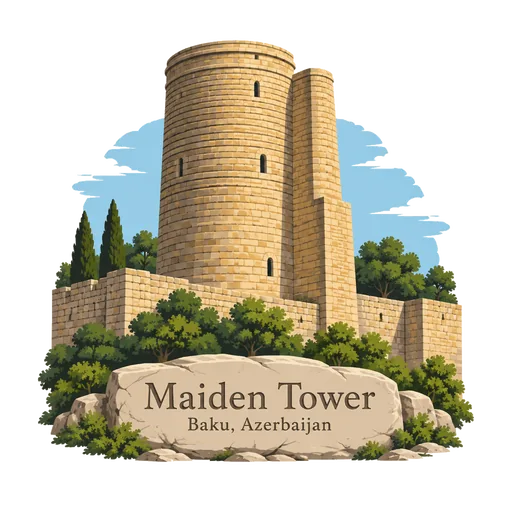
Maiden Tower
A 12th century stone tower in the Old City of Baku, about 29 metres tall with walls up to five metres thick. Its purpose is still debated, and the many floors now hold a museum and a lookout over the old town and the Caspian.
-
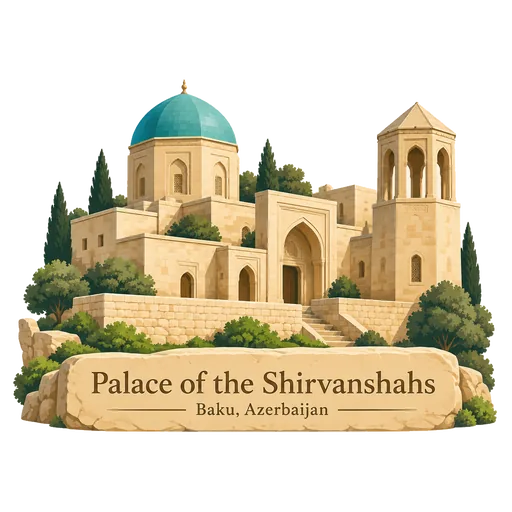
Palace of the Shirvanshahs
A 15th century palace complex on a hill in the Old City, built by the Shirvanshah rulers. It includes the main palace, a mosque, a mausoleum and a burial vault, all in pale local limestone with carved inscriptions.
-
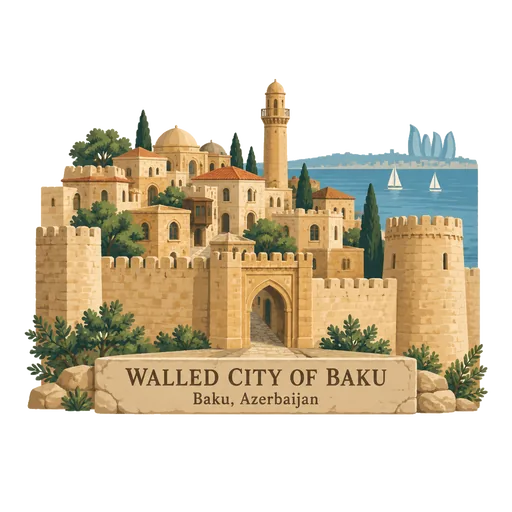
Walled City of Baku
The medieval old town of Baku, enclosed by 12th century walls above the Caspian shore. Narrow stone lanes lead to the Shirvanshahs' Palace, the Maiden Tower, caravanserais and mosques, and the whole quarter is a UNESCO World Heritage Site.
Heritage sites in Baku (1)
-
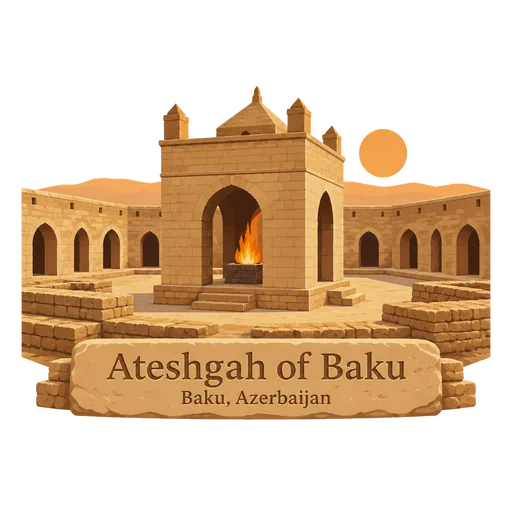
Ateshgah of Baku
A pentagonal temple compound at Surakhani on the Absheron Peninsula, long visited by Hindu, Sikh and Zoroastrian pilgrims. The present buildings date from the 17th and 18th centuries, and a flame once burned here from natural gas vents.
Famous places to visit in Baku (2)
-
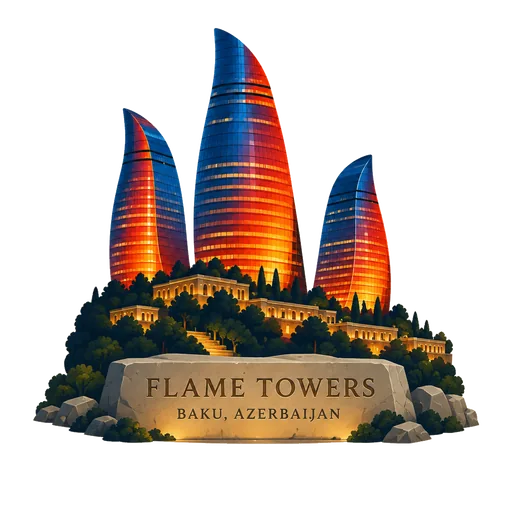
Flame Towers
Three curved skyscrapers on a hill above Baku, the tallest rising to about 190 metres, completed in 2012. LED screens cover their faces and show flames and flags at night, making them the best known mark of the city skyline.
-
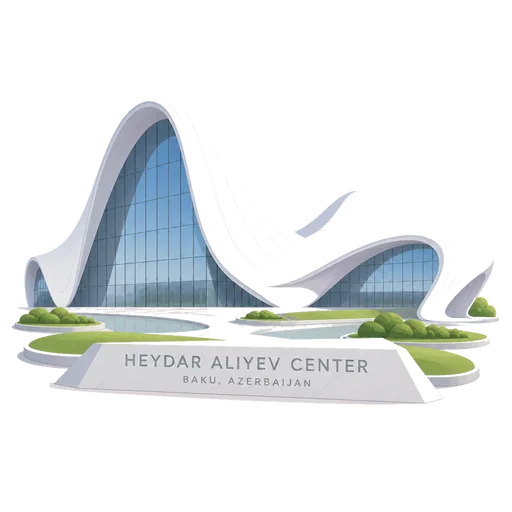
Heydar Aliyev Center
A cultural centre designed by Zaha Hadid and opened in 2012, known for its white flowing curves with no sharp corners. It holds a museum, exhibition halls and an auditorium, and is set in a landscaped plaza.
Hidden gems in Baku (22)
-
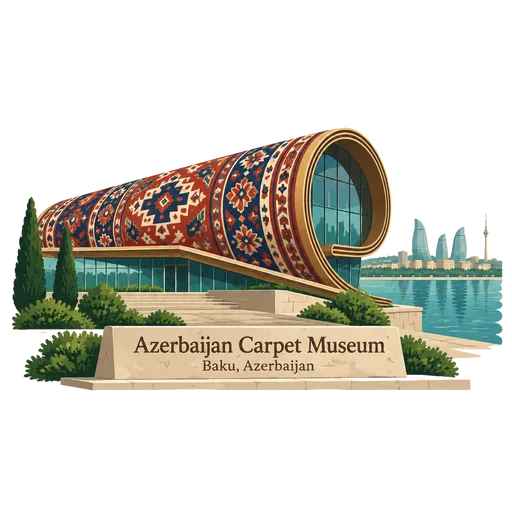
Azerbaijan Carpet Museum
A museum on the Baku seafront, built in the shape of a rolled carpet and opened in its current building in 2014. It displays carpets and rugs from every weaving region of the country, along with other textile art.
-
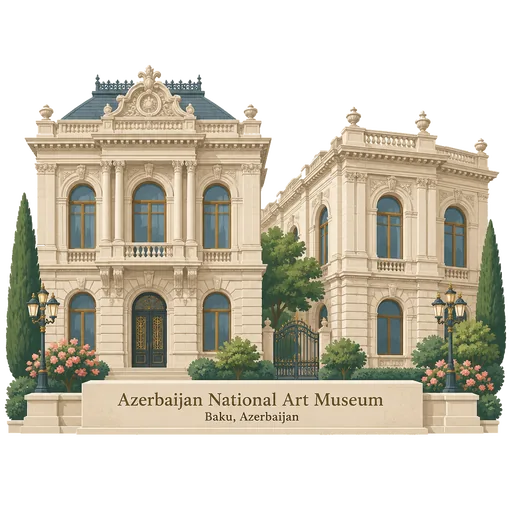
Azerbaijan National Art Museum
The country's largest art museum, founded in 1936 and housed in two historic buildings on Baku's Niyazi Street. It holds thousands of works of Azerbaijani art, along with European and Russian paintings.
-
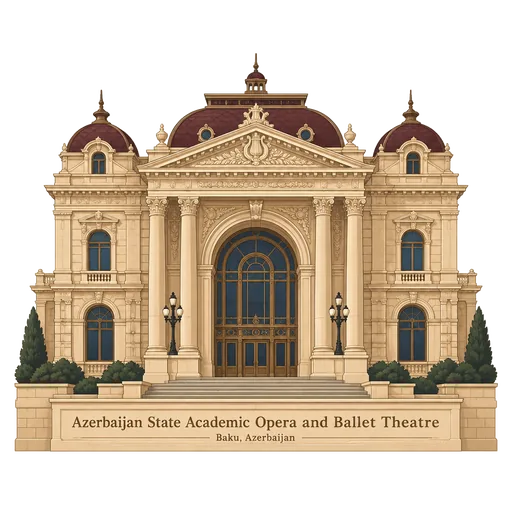
Azerbaijan State Academic Opera and Ballet Theatre
An opera house in central Baku, designed by the architect Nikolai Bayev and built in the early 1910s. It stages opera and ballet in a neo classical hall, and the facade is lit at night.
-
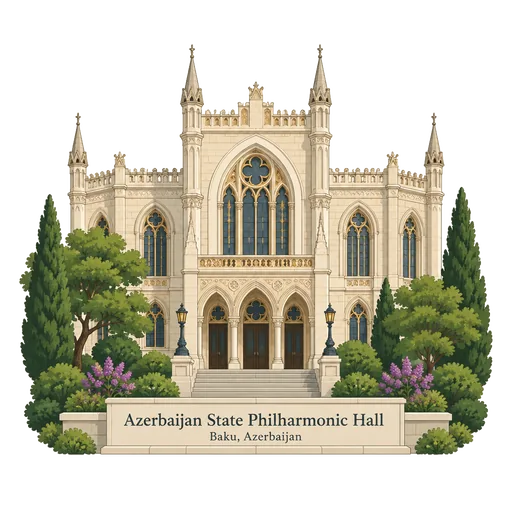
Azerbaijan State Philharmonic Hall
A concert hall in Baku's central gardens, built in 1912 in a Gothic revival style as a casino. It now stages classical and mugham concerts, and carries the name of the singer Muslim Magomayev.
-
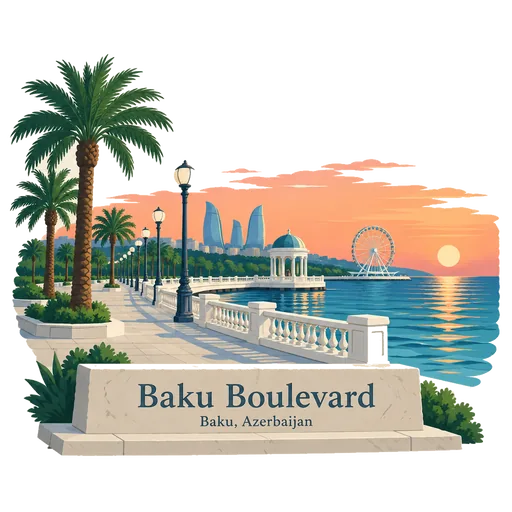
Baku Boulevard
A seaside promenade along the Caspian shore in Baku, first laid out in 1909 and extended since. It has gardens, fountains, cafes, a Ferris wheel and a small carousel, and is a favourite place for an evening walk.
-
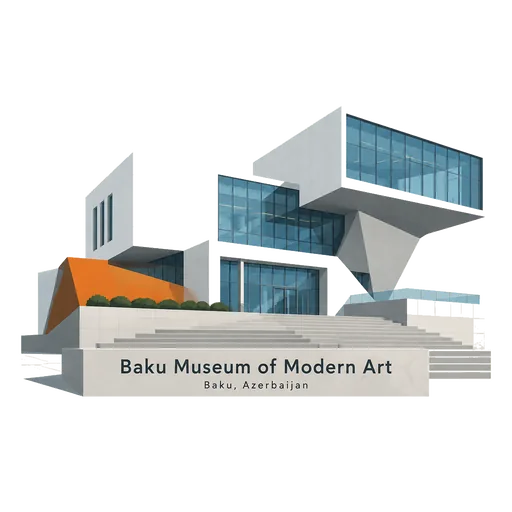
Baku Museum of Modern Art
A museum of modern art in Baku, opened in 2009 to show Azerbaijani and international works from the 20th century onward. Its collection includes paintings, sculpture and graphic art, and the museum holds changing exhibitions through the year.
-
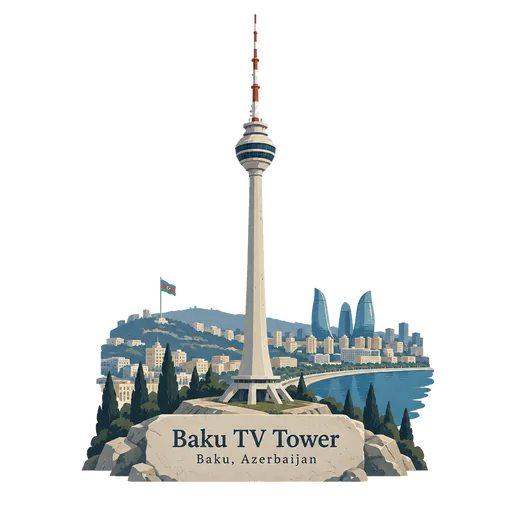
Baku TV Tower
A concrete telecommunications tower in Baku, finished in 1996 and rising 310 metres. It has an observation deck and a revolving restaurant, and the lights on it can be seen from much of the city.
-
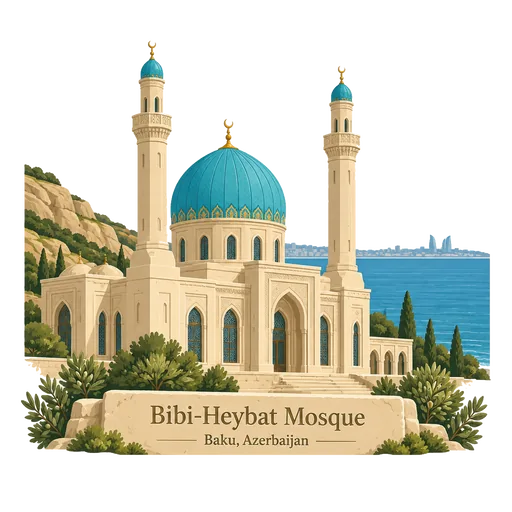
Bibi-Heybat Mosque
A mosque on the shore south of Baku, built over the tomb of Hakima Khanum, a descendant of the Prophet. The original from the 13th century was destroyed in 1934, and the present building was completed in the 1990s.
-
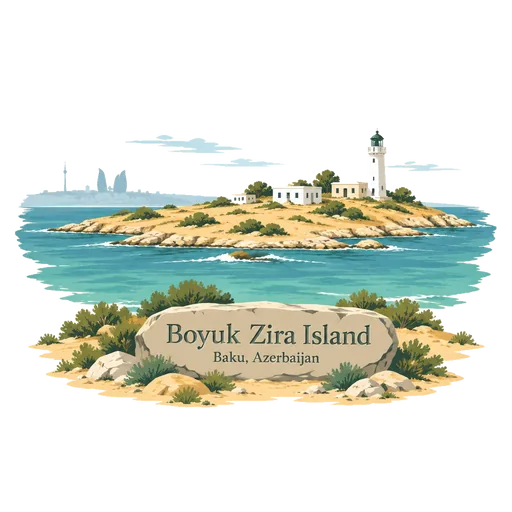
Boyuk Zira Island
An island in the Baku Archipelago, also called Nargin, lying in Baku Bay not far from the city. It is the largest island of the archipelago, about 3 kilometres long, and has long been closed as a military site. Gulls and grebes live around its shores.
-
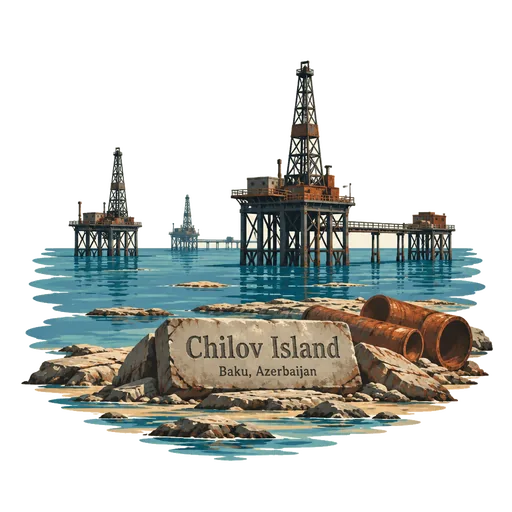
Chilov Island
A small island in the Caspian Sea about 55 kilometres east of Baku, part of the Absheron archipelago. Also known as Zhiloy, it is an oil island where the first well was drilled in the 1940s, and about 1,700 people live there. Its highest point is only 8 metres.
-
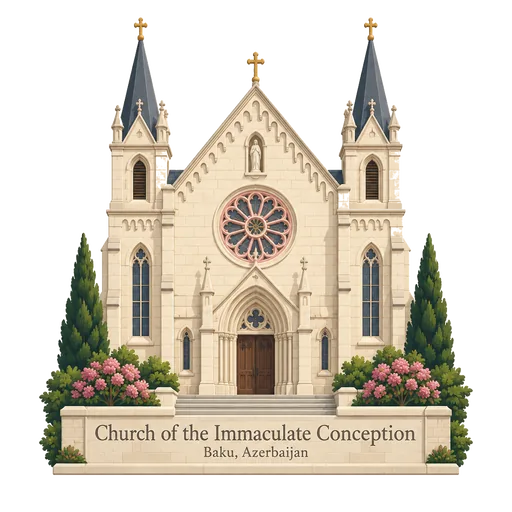
Church of the Immaculate Conception
The Roman Catholic church in Baku, rebuilt in 2007 after the original of 1882 was destroyed in the Soviet period. It is the main church for the small Catholic community in Azerbaijan, with a simple modern design.
-
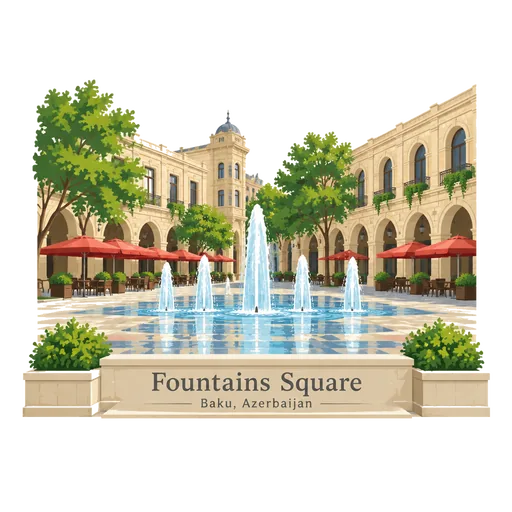
Fountains Square
A pedestrian square in downtown Baku, once called Parapet, set between the Old City walls and the shopping streets. Its fountains and cafes make it a popular meeting place, especially on summer evenings.
-
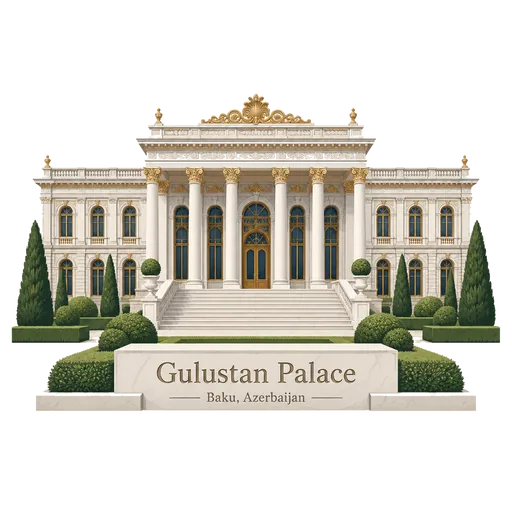
Gulustan Palace
The main state convention centre of the Azerbaijani government, known in the Soviet era as the Gulustan Wedding Palace Complex. It stands on Baku's highland on Istiglaliyyat Street, overlooking the city and Baku Bay, and hosts official ceremonies and receptions.
-
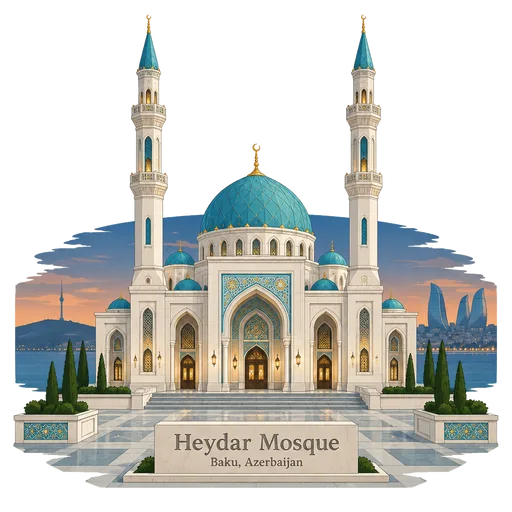
Heydar Mosque
A large mosque in Baku opened in December 2014 and named after Heydar Aliyev. Its white stone walls, twin minarets and big central dome hold several thousand worshippers, and it is among the biggest mosques in the Caucasus.
-
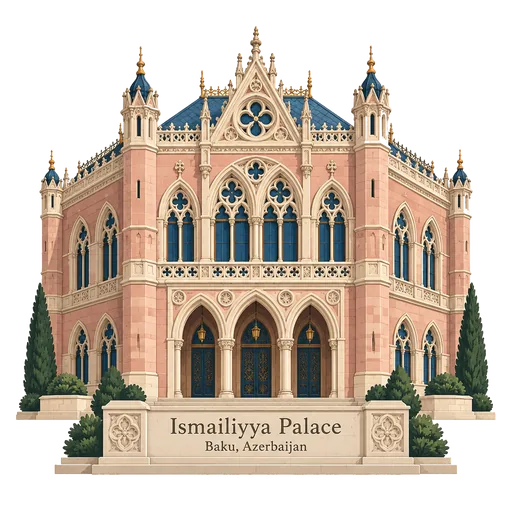
Ismailiyya Palace
A Venetian Gothic style building in central Baku, built in 1913 for the philanthropist Musa Nagiyev in memory of his son Ismail. It now houses the Presidium of the Academy of Sciences.
-
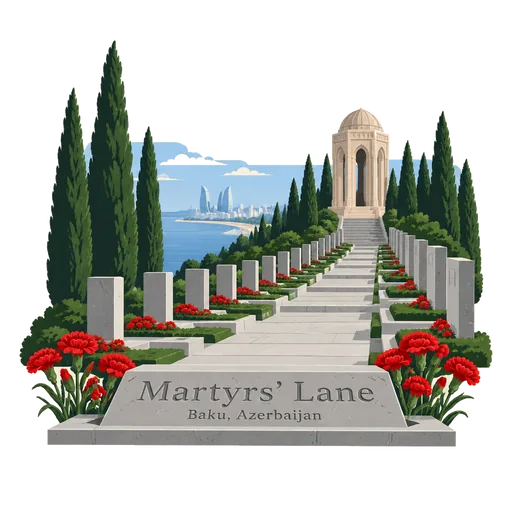
Martyrs' Lane
A hillside memorial and cemetery above Baku, where victims of the Soviet army crackdown of January 1990 are buried alongside those killed in the Karabakh wars. An eternal flame burns in the centre, and the lane has wide views over the bay.
-
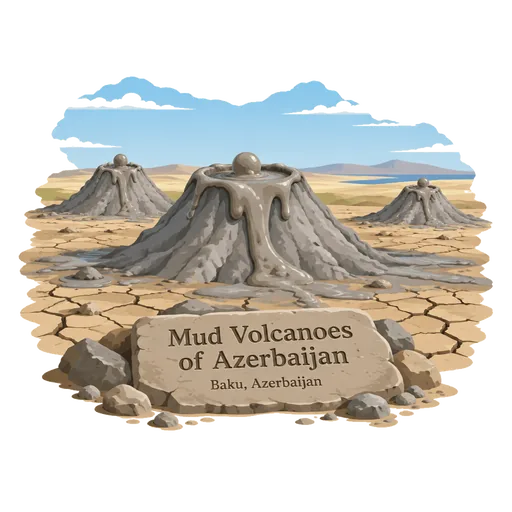
Mud Volcanoes of Azerbaijan
Azerbaijan has the greatest number of mud volcanoes in the world, mostly on the dry plains south of Baku. Small cones bubble with cold grey mud and gas, and the Gobustan area is the usual place to see them up close.
-
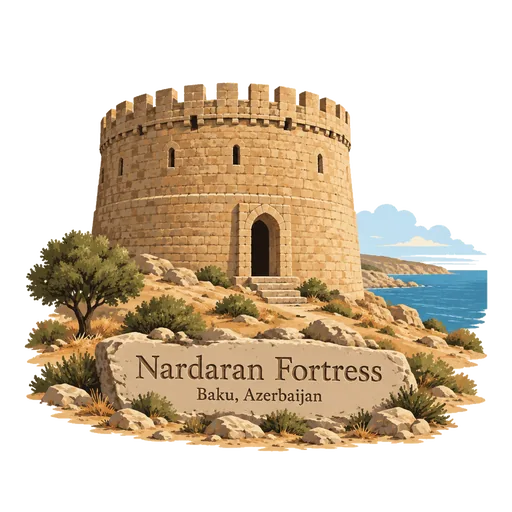
Nardaran Fortress
A historical fortress in the Nardaran settlement of the Sabunchu district on the Absheron Peninsula, near Baku. Built in the Middle Ages with round towers, it is registered by the Ministry of Culture and Tourism as a monument of global significance.
-
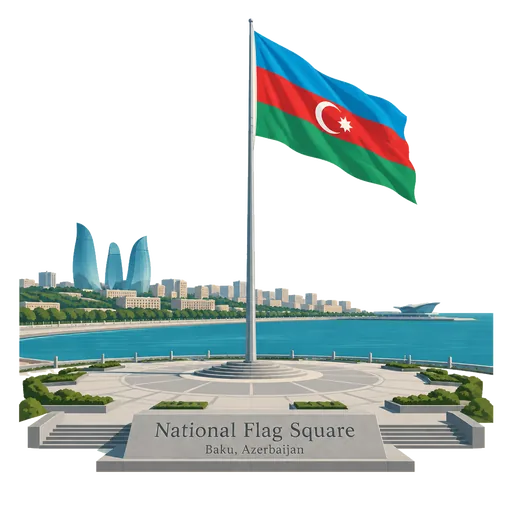
National Flag Square
A large waterfront square in Baku's Bayil district, home to one of the tallest free standing flagpoles in the world at 162 metres. It also holds a museum of the national flag and looks across the Caspian.
-
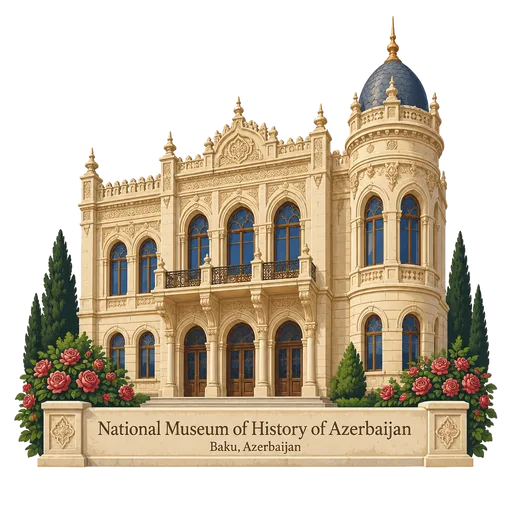
National Museum of History of Azerbaijan
The largest museum in the country, set in the former mansion of the oil baron Haji Zeynalabdin Taghiyev in central Baku. Its halls trace the history of Azerbaijan from prehistory to the modern age, with archaeological finds and coins.
-
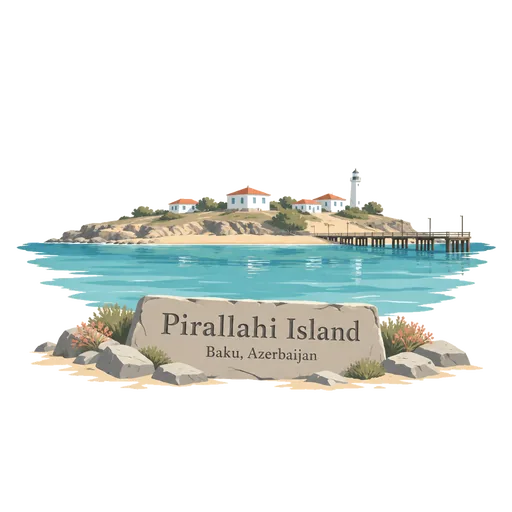
Pirallahi Island
A flat island off the north eastern coast of the Absheron Peninsula, about 43 kilometres from Baku and joined to the mainland by a causeway. It has been tied to the oil industry since the 19th century and has a quiet, industrial feel.
-
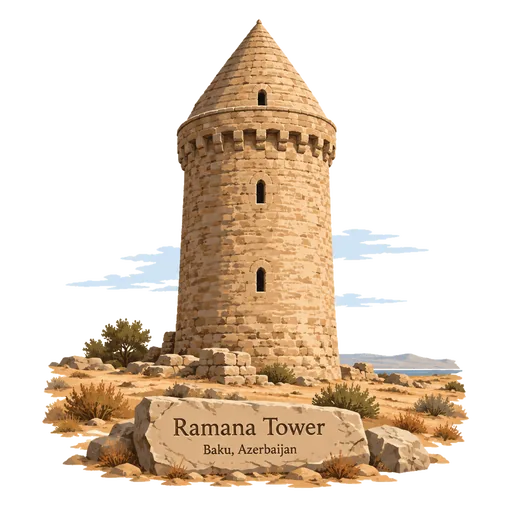
Ramana Tower
A medieval stone tower in the village of Ramana in the Sabunchu district of Baku, on the Absheron Peninsula. The Ministry of Culture of Azerbaijan registered it as a monument of global significance, and it was restored in 2001 along with other historic sites.
Collecting in Baku
What are the best places to visit in Baku?
LOQAH lists 30 places in Baku. The best known include Gobustan National Park, Gobustan Rock Art, Maiden Tower, Palace of the Shirvanshahs and Walled City of Baku. Each has a stamp of its own to collect when you are there.
How many LOQAH stamps are there in Baku?
30, and more are added over time. Each place has LOQAH's carefully crafted stamp of its own.
How do I collect a stamp in Baku?
Open LOQAH at the place and get its stamp. LOQAH checks where you are once, at that moment; at the place itself the stamp is confirmed on site, with a gold badge.
I have been to places in Baku before. Can I add them?
Yes. In Earlier trips, choose Baku and swipe through its stamps, or import your Google Timeline. Each one goes into your volume with the date, if you know it.
More in Azerbaijan
Collect your first stamp.
LOQAH is free on iPhone and Android, in India and 40 more countries, with more countries on the way. Stand at a place, collect its stamp, and keep every trip in a passport that grows.