

Places to visit in Luxor, Egypt
14 places to visit in Luxor, Egypt, each with LOQAH's carefully crafted stamp of its own: Karnak Temple, Luxor Temple, Ramesseum and more. Stand at any of them with the app open and the stamp is yours, confirmed on site, in your Luxor volume.
5 UNESCO World Heritage sites · 6 Famous places to visit · 3 Hidden gems
UNESCO World Heritage sites in Luxor (5)
-
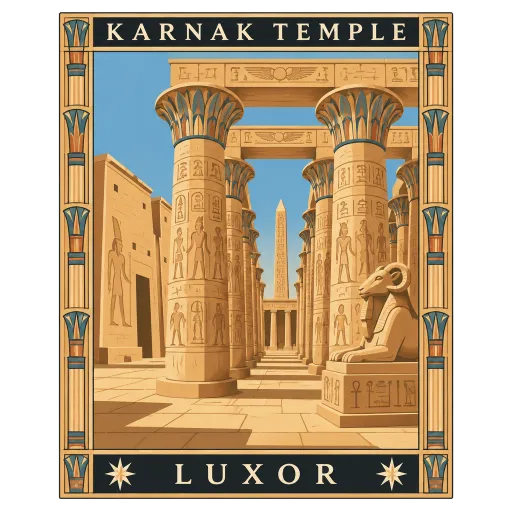
Karnak Temple
A vast complex of temples, pylons and chapels built over some two thousand years, from the Middle Kingdom to the Ptolemies, and centred on the god Amun. Its Great Hypostyle Hall is a forest of 134 giant columns carved from top to bottom.
-
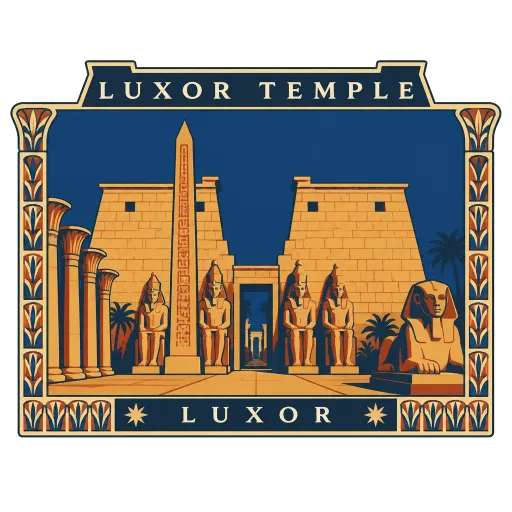
Luxor Temple
A great temple on the east bank of the Nile in the middle of Luxor, built around 1400 BC and known in Egyptian as the southern sanctuary. A single obelisk stands at its gate, its twin now in Paris, and the columns glow when lit after dark.
-
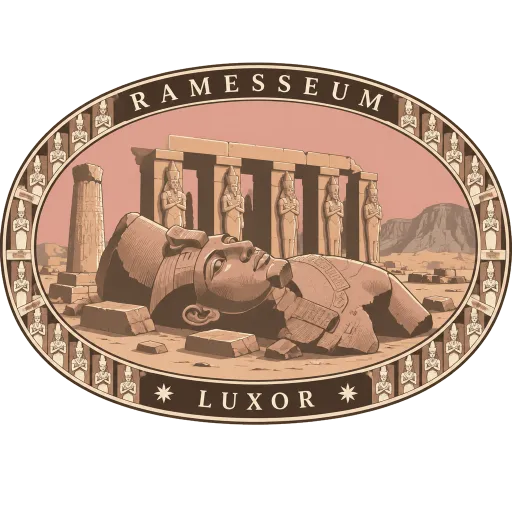
Ramesseum
The memorial temple of Ramesses II on the west bank, across the river from Luxor. Its toppled granite colossus of the king, broken across the courtyard, is said to have inspired Shelley's poem Ozymandias.
-
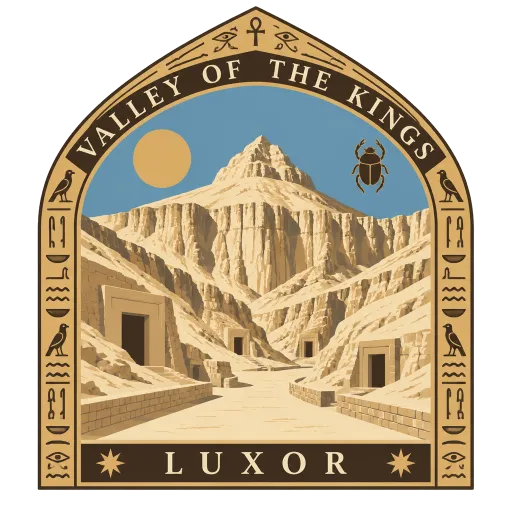
Valley of the Kings
A desert valley on the west bank where, for nearly 500 years of the New Kingdom, pharaohs and powerful nobles were buried in tombs cut deep into the rock. Long painted corridors lead down to burial chambers covered in texts for the journey through the underworld.
-
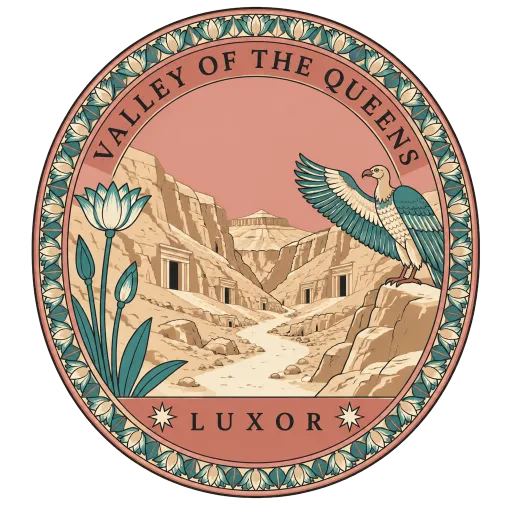
Valley of the Queens
A west bank valley where queens, princes and princesses were buried from about 1560 to 1130 BC. Its ancient name, Ta-Set-Neferu, can mean both the Place of Beauty and the Place of the Royal Children.
Famous places to visit in Luxor (6)
-
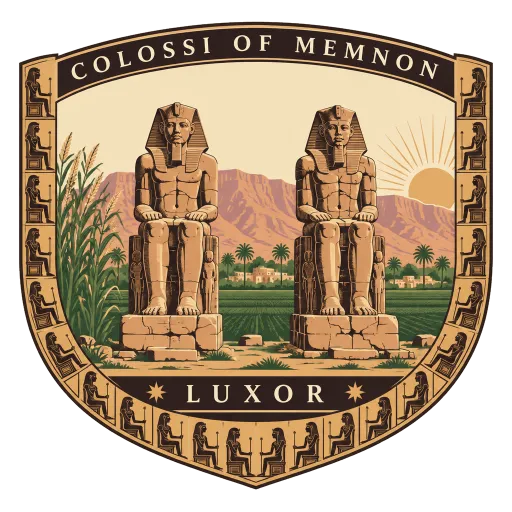
Colossi of Memnon
Two giant stone statues of Amenhotep III, seated in the fields of the west bank since about 1350 BC in front of his vanished temple. Greek and Roman visitors came to hear the northern one sing at dawn, and carved over a hundred inscriptions on its legs.
-
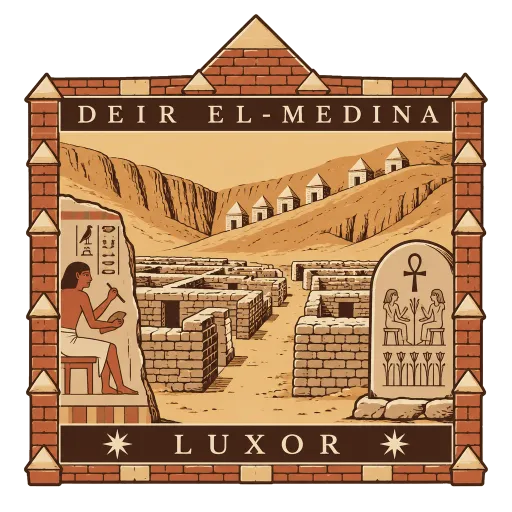
Deir el-Medina
The village of the artisans who cut and painted the royal tombs, called the Servants in the Place of Truth. The stone outlines of their houses survive, and their own small tombs, painted with great skill, rise up the hillside above.
-
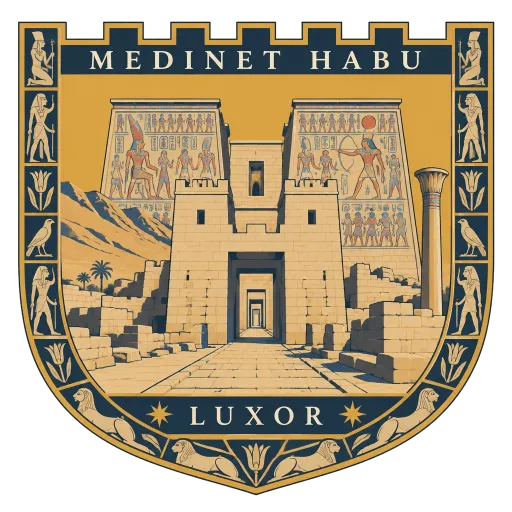
Medinet Habu
A walled site at the foot of the Theban hills, best known for the mortuary temple of Ramesses III, one of the largest and best preserved of the New Kingdom. Its deep cut reliefs still carry much of their original colour.
-
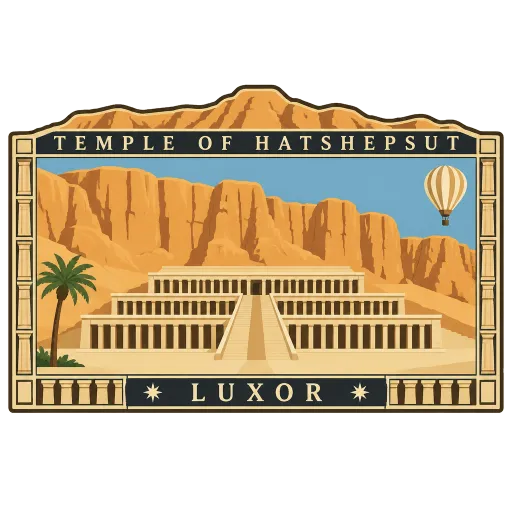
Temple of Hatshepsut
The mortuary temple of the woman pharaoh Hatshepsut, three broad terraces rising out of the desert floor into the cliffs of Deir el-Bahari. Its long colonnades and clean lines make it look surprisingly modern for a building some 3,500 years old.
-
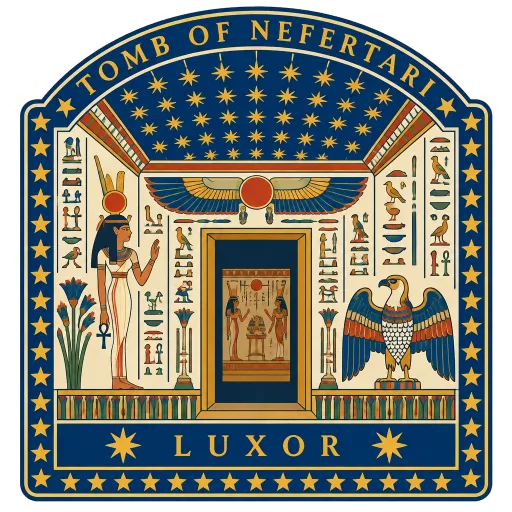
Tomb of Nefertari
Tomb QV66, made for Nefertari, the favourite Great Wife of Ramesses II, and found by Ernesto Schiaparelli in 1904. Its wall paintings, with their bright colours and starry ceilings, are among the finest that survive from ancient Egypt.
-
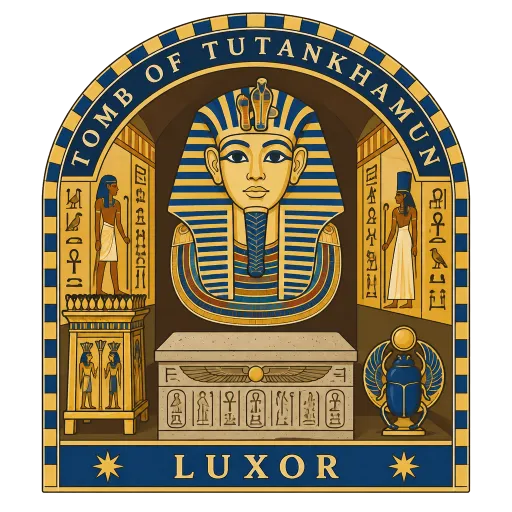
Tomb of Tutankhamun
Tomb KV62 in the Valley of the Kings, found nearly intact by Howard Carter in 1922. It is small and plainer than its neighbours, probably first meant for someone else, yet it held the richest royal burial ever found, and the king's mummy still lies inside.
Hidden gems in Luxor (3)
-
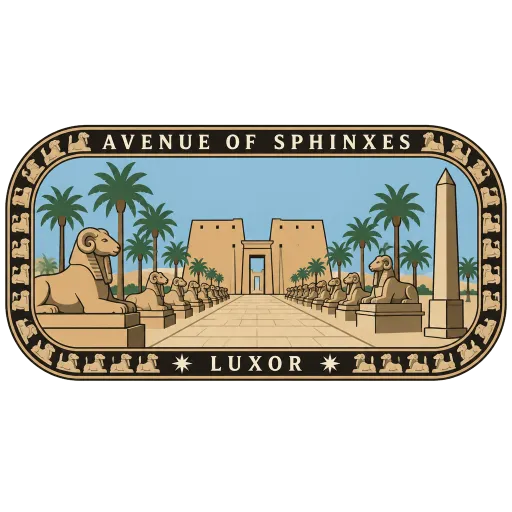
Avenue of Sphinxes
A processional road 2.7 kilometres long that links Karnak with Luxor Temple, lined on both sides with sphinxes and ram-headed statues. Uncovered from under the modern town, it can now be walked much as it was in ancient Thebes.
-
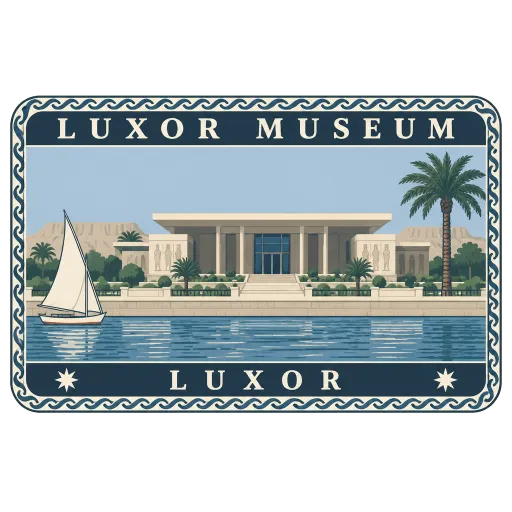
Luxor Museum
An archaeological museum on the corniche overlooking the Nile, showing finds from Thebes and the temples around it. The collection is small and carefully lit, so each statue gets room to be seen properly.
-
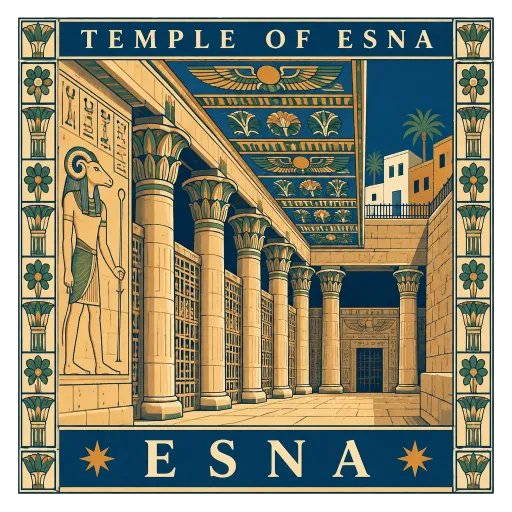
Temple of Esna
A temple to the creator god Khnum and the goddess Neith in the town of Esna, about 64 kilometres south of Luxor. It sits in a pit well below the modern street, and its columned hall has painted ceilings with their colours brought back by cleaning.
Collecting in Luxor
What are the best places to visit in Luxor?
LOQAH lists 14 places in Luxor. The best known include Karnak Temple, Luxor Temple, Ramesseum, Valley of the Kings and Valley of the Queens. Each has a stamp of its own to collect when you are there.
How many LOQAH stamps are there in Luxor?
14, and more are added over time. Each place has LOQAH's carefully crafted stamp of its own.
How do I collect a stamp in Luxor?
Open LOQAH at the place and get its stamp. LOQAH checks where you are once, at that moment; at the place itself the stamp is confirmed on site, with a gold badge.
I have been to places in Luxor before. Can I add them?
Yes. In Earlier trips, choose Luxor and swipe through its stamps, or import your Google Timeline. Each one goes into your volume with the date, if you know it.
More in Egypt
Collect your first stamp.
LOQAH is free on iPhone and Android, in India and 20 more countries, with more countries on the way. Stand at a place, collect its stamp, and keep every trip in a passport that grows.