


Swayambhunath
An ancient stupa on a wooded hill west of Kathmandu, its golden spire painted with the Buddha's watching eyes. The name means self-arisen, and the hill has long been honoured as the home of the primordial Buddha. Monkeys roam its steps, hence its other name, the Monkey Temple.
- Where
- Kathmandu, Bagmati, Nepal
- Grade
- UNESCO heritage
- Worth
- 10 points collected on site, plus 8 for its grade
- Coordinates
- 27.7150, 85.2900
Get the Swayambhunath stamp
Open LOQAH when you are at Swayambhunath. It checks where you are once, at that moment, and the stamp is yours: confirmed on site in gold and struck with the date. It goes into your Bagmati volume with your photos and a note.
Near Swayambhunath
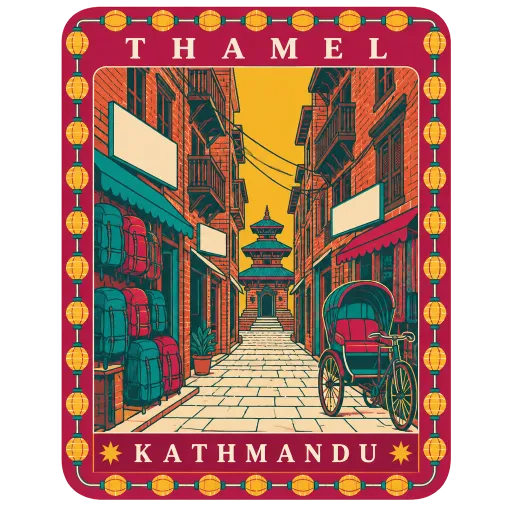
Thamel 2.0 km
Kathmandu's tangle of narrow lanes packed with guesthouses, trekking shops, cafés and craft stalls, the centre of travel in the city since the hippie days. The name comes from Tha Bahi, a Newar monastery that still stands in the neighbourhood.
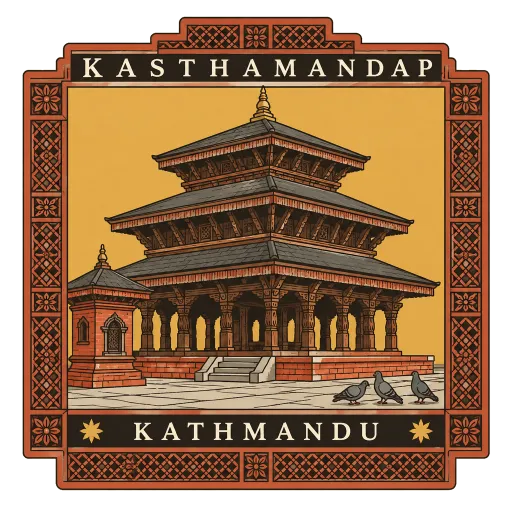
Kasthamandap 2.0 km
A wooden temple and public shelter in Kathmandu Durbar Square, with parts once dated to the 7th century. Kathmandu is said to take its name from it, the wooden pavilion, and it has been rebuilt after it fell in 2015.
Kathmandu Durbar Square 2.1 km
The old royal heart of Kathmandu, a crowd of pagoda temples, courtyards and palace wings in front of Hanuman Dhoka. It is one of the valley's three Durbar Squares on the UNESCO World Heritage list, and the house of the Kumari, the living goddess, stands at its edge.
Taleju Temple 2.1 km
The tallest temple in Kathmandu Durbar Square, built in 1564 by Mahendra Malla for Taleju Bhawani, the royal goddess of the Malla kings. Its tiered roofs rise over the palace, and its inner shrine opens only once a year, during Dashain.
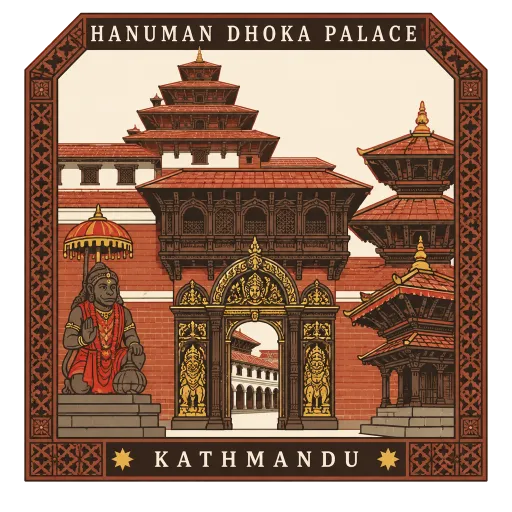
Hanuman Dhoka Palace 2.1 km
The royal palace of the Malla kings and later the Shah dynasty, in the middle of Kathmandu Durbar Square. It takes its name from the stone Hanuman, draped in red cloth, that guards the main gate: dhoka means door in Nepali.
Garden of Dreams 2.4 km
A neoclassical walled garden laid out in 1920 for Kaiser Sumsher Rana, with pavilions, ponds, pergolas and urns, a quiet step away from Thamel. It fell into neglect after his death and was restored with the help of the Austrian government.
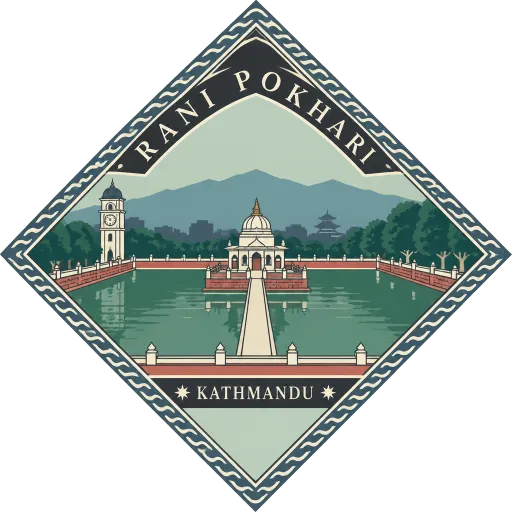
Rani Pokhari 2.6 km
A square 17th century tank, 180 by 140 metres, in the middle of Kathmandu, with a small white temple on an island reached by a causeway. King Pratap Malla built it for his queen, and it once marked the eastern edge of the city.
Dharahara 2.7 km
A white tower rising over Sundhara in central Kathmandu, first built in 1832 by Bhimsen Thapa at the command of Queen Lalit Tripurasundari. It has fallen and been rebuilt several times, and still serves as a lookout over the city.




More UNESCO World Heritage sites in Bagmati
Questions
Where is Swayambhunath?
Swayambhunath is in Kathmandu, Bagmati, Nepal. The nearest other LOQAH stamps are Thamel (2.0 km), Kasthamandap (2.0 km), Kathmandu Durbar Square (2.1 km).
How do I get the Swayambhunath stamp?
Open LOQAH when you are at Swayambhunath and get its stamp. The app checks where you are once, at that moment, and the stamp goes into your Bagmati volume, confirmed on site, with the date.
I have been to Swayambhunath before. Can I still have the stamp?
Yes. Add it from Earlier trips in your Bagmati volume, with the date if you know it, or import your Google Timeline and LOQAH matches the places you were.
Collect your first stamp.
LOQAH is free on iPhone and Android, in India and 20 more countries, with more countries on the way. Stand at a place, collect its stamp, and keep every trip in a passport that grows.