

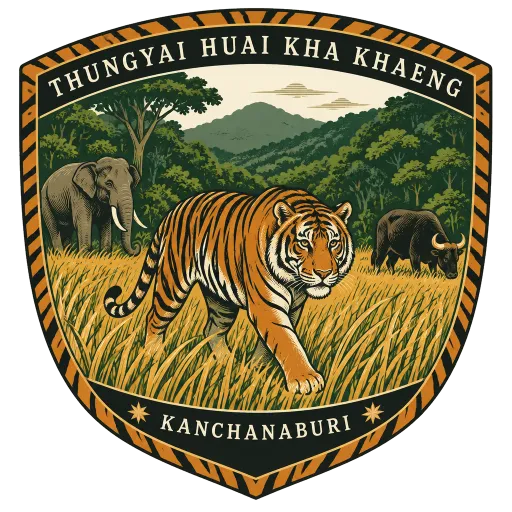
Thungyai-Huai Kha Khaeng Wildlife Sanctuaries
Two adjoining wildlife sanctuaries, Thung Yai Naresuan and Huai Kha Khaeng, that form much of Thailand's Western Forest Complex across Kanchanaburi, Tak and Uthai Thani. Inscribed as a World Heritage Site in 1991, they are a refuge for tigers, elephants and wild cattle.
- Where
- Kanchanaburi, Kanchanaburi, Thailand
- Grade
- UNESCO heritage
- Worth
- 10 points collected on site, plus 8 for its grade
- Coordinates
- 15.3333, 98.9167
Get the Thungyai-Huai Kha Khaeng Wildlife Sanctuaries stamp
Open LOQAH when you are at Thungyai-Huai Kha Khaeng Wildlife Sanctuaries. It checks where you are once, at that moment, and the stamp is yours: confirmed on site in gold and struck with the date. It goes into your Kanchanaburi volume with your photos and a note.
Near Thungyai-Huai Kha Khaeng Wildlife Sanctuaries
Three Pagodas Pass 55 km
A low pass in the Tenasserim Hills, 282 metres up, on the border between Thailand and Myanmar, named for three small white pagodas on the Thai side. It has been a route between the two countries for centuries.
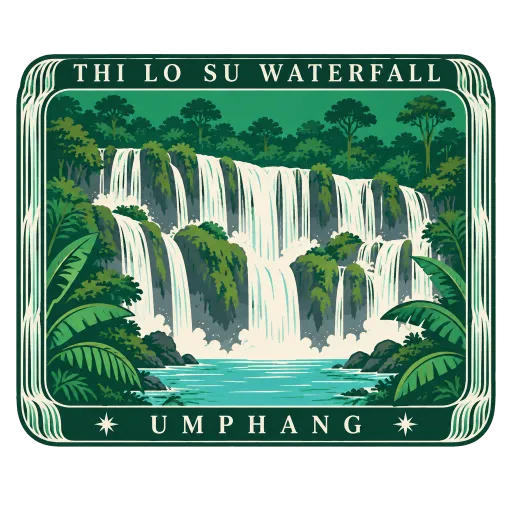
Thi Lo Su Waterfall 68 km
A waterfall deep in the Umphang Wildlife Sanctuary in Tak, often said to be the largest in Thailand: about 250 metres high and nearly 450 metres wide. Its water spreads down a broad green wall of forest and rock in many falling strands.
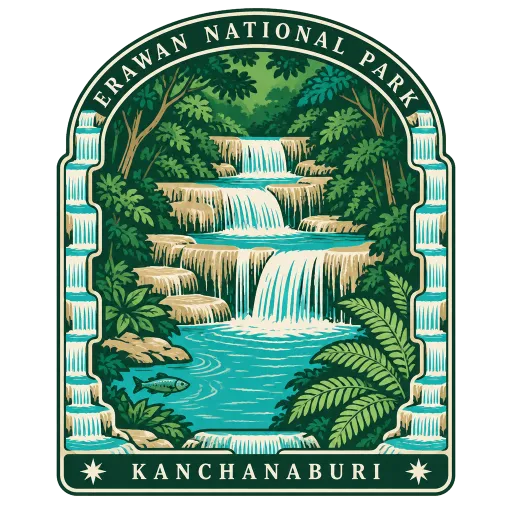
Erawan National Park 108 km
A national park in the Tenasserim Hills of Kanchanaburi, founded in 1975. It is best known for the Erawan waterfall, seven tiers of turquoise pools named after the three-headed elephant of Hindu myth.
Hellfire Pass 109 km
A cutting hacked through rock for the Burma Railway during the Second World War, by prisoners of war and Asian labourers working by torchlight. A walking trail follows the old line through the cutting, and a memorial museum tells the story of those who built it.
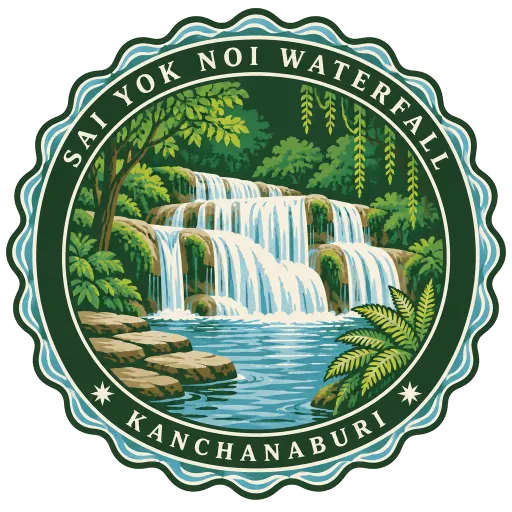
Sai Yok Noi Waterfall 123 km
A waterfall that spills over tiers of limestone near the small town of Nam Tok Sai Yok Noi in Kanchanaburi's Sai Yok district. It is at its fullest in the rainy season, and in drier months people wade and picnic on the rocks.
Kamphaeng Phet Historical Park 143 km
The ruins of old Kamphaeng Phet on the Ping River, part of the same UNESCO listing as Sukhothai and Si Satchanalai. Large laterite wats stand in the forest inside and outside the old walls, while smaller brick sites lie at Nakhon Chum across the river.
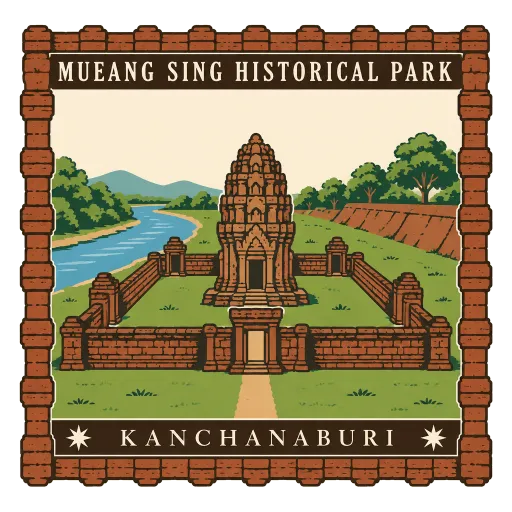
Mueang Sing Historical Park 148 km
The remains of two Khmer temples of the 13th and 14th centuries, set inside old earthen walls by the Khwae Noi river in Sai Yok district. It was declared a historical park in 1987 and is quiet enough to have the laterite towers almost to yourself.
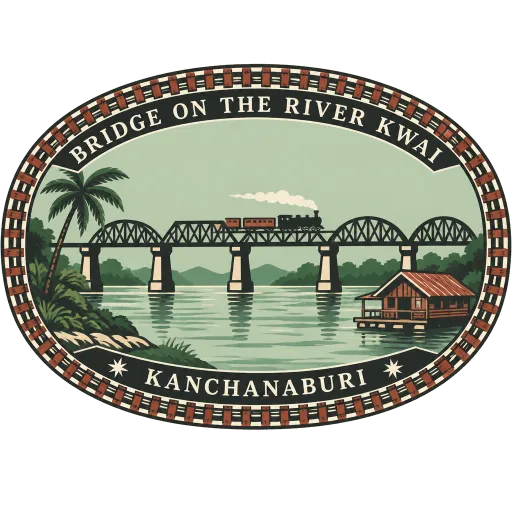
Bridge on the River Kwai 157 km
An iron railway bridge over the Khwae Yai river, part of the line from Thailand to Burma built during the Second World War by prisoners of war and Asian labourers. The 1957 film made its name known around the world, and trains still cross it.



Questions
Where is Thungyai-Huai Kha Khaeng Wildlife Sanctuaries?
Thungyai-Huai Kha Khaeng Wildlife Sanctuaries is in Kanchanaburi, Kanchanaburi, Thailand. The nearest other LOQAH stamps are Three Pagodas Pass (55 km), Thi Lo Su Waterfall (68 km), Erawan National Park (108 km).
How do I get the Thungyai-Huai Kha Khaeng Wildlife Sanctuaries stamp?
Open LOQAH when you are at Thungyai-Huai Kha Khaeng Wildlife Sanctuaries and get its stamp. The app checks where you are once, at that moment, and the stamp goes into your Kanchanaburi volume, confirmed on site, with the date.
I have been to Thungyai-Huai Kha Khaeng Wildlife Sanctuaries before. Can I still have the stamp?
Yes. Add it from Earlier trips in your Kanchanaburi volume, with the date if you know it, or import your Google Timeline and LOQAH matches the places you were.
Collect your first stamp.
LOQAH is free on iPhone and Android, in India and 20 more countries, with more countries on the way. Stand at a place, collect its stamp, and keep every trip in a passport that grows.