

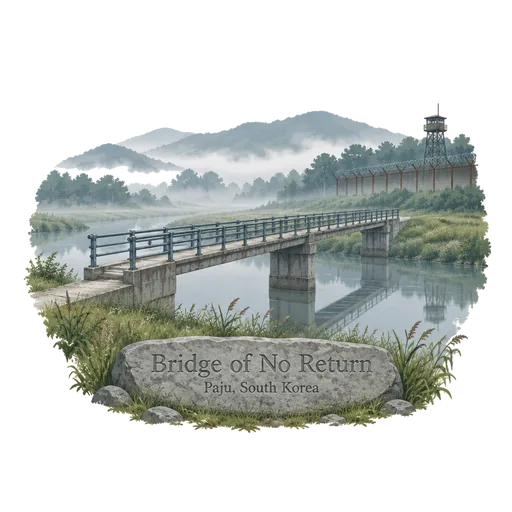
Bridge of No Return
A bridge in the Joint Security Area that crosses the Military Demarcation Line between North and South Korea. Prisoners of war were allowed to choose a side here at the end of the Korean War in 1953.
- Where
- Paju, Gyeonggi, South Korea
- Grade
- Well known
- Worth
- 10 points collected on site, plus 1 for its grade
- Coordinates
- 37.9561, 126.6706
Get the Bridge of No Return stamp
Open LOQAH when you are at Bridge of No Return. It checks where you are once, at that moment, and the stamp is yours: confirmed on site in gold and struck with the date. It goes into your Gyeonggi volume with your photos and a note.
Near Bridge of No Return
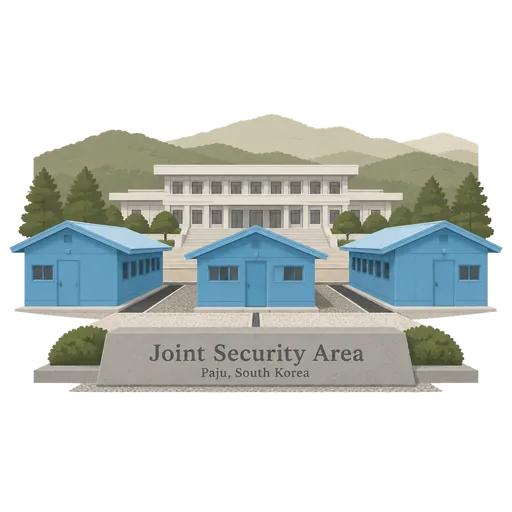
Joint Security Area 0.5 km
The only part of the Demilitarized Zone where North and South Korean soldiers stand face to face. It is at the truce village of Panmunjom, and guided tours cross the blue conference huts that straddle the border.
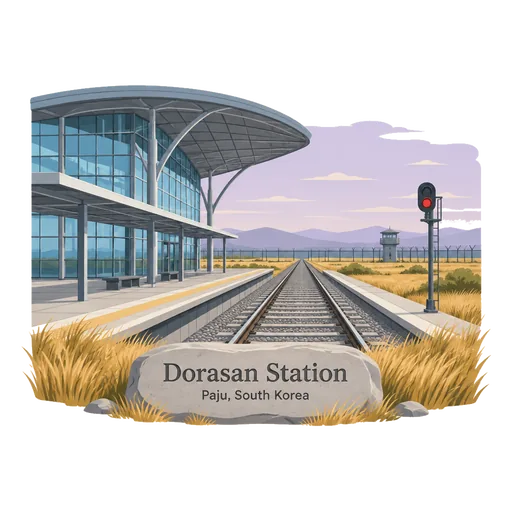
Dorasan Station 7.3 km
A railway station on the Gyeongui line near the border at Paju, the northernmost station in South Korea. Built to link the two Koreas by rail, it stands as a symbol of hopes for unification.
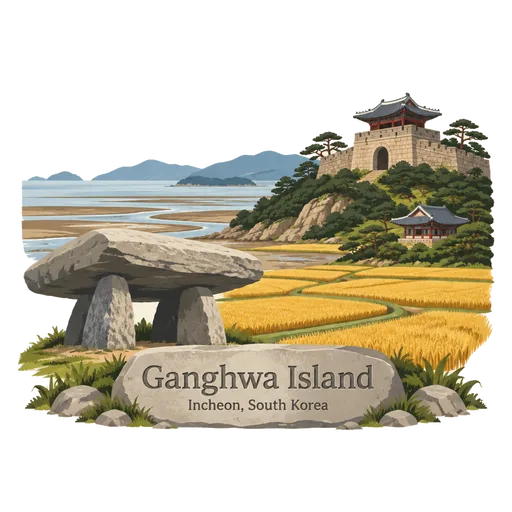
Ganghwa Island 34 km
An island in Ganghwa County, Incheon, lying in the Yellow Sea at the estuary of the Han River. It is the fifth largest island in South Korea and holds dolmens, old fortifications and temples, and it has long served as a refuge for the capital.
Bukhansan 43 km
A mountain on the northern edge of Seoul, with three main peaks, the highest being Baegundae at 836.5 metres. The national park around it is one of the most visited in the world, with hiking trails, granite cliffs and old temples.
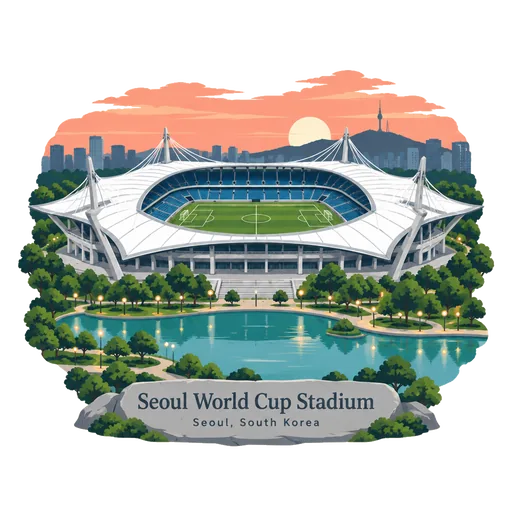
Seoul World Cup Stadium 48 km
A football stadium in Mapo District, Seoul, also known as the Sangam Stadium. It was built for the 2002 FIFA World Cup, and it is now the home ground of the club FC Seoul.
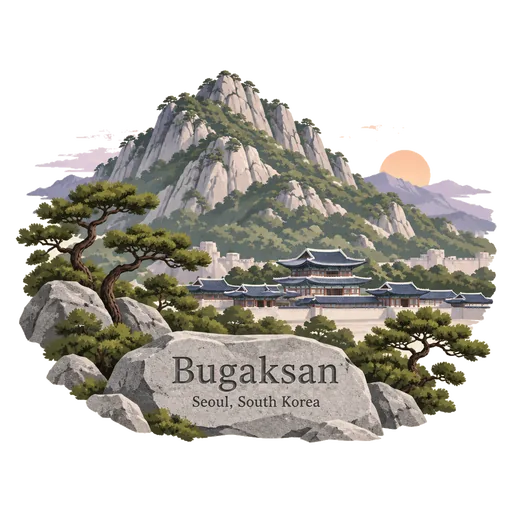
Bugaksan 48 km
A mountain in the north of Seoul that overlooks the former royal palace of Gyeongbokgung and the old presidential residence, the Blue House. Along with Inwangsan, Naksan and Namsan it is one of the four mountains that surround the Seoul basin.
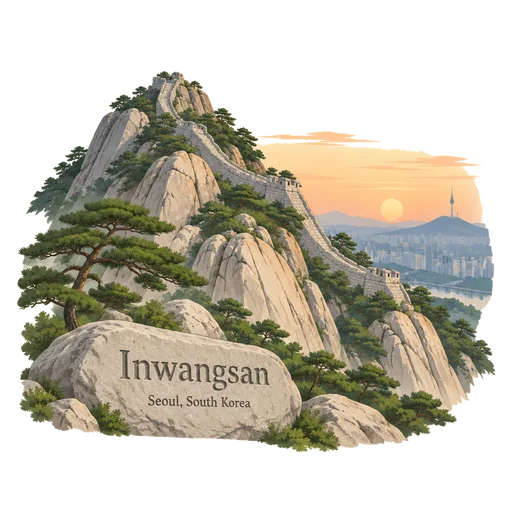
Inwangsan 48 km
A mountain in central Seoul, 338 metres high, lying across Jongno and Seodaemun Districts. Its name means compassionate king. Granite outcrops and a stretch of the old city wall make it a popular short hike with views over the capital.
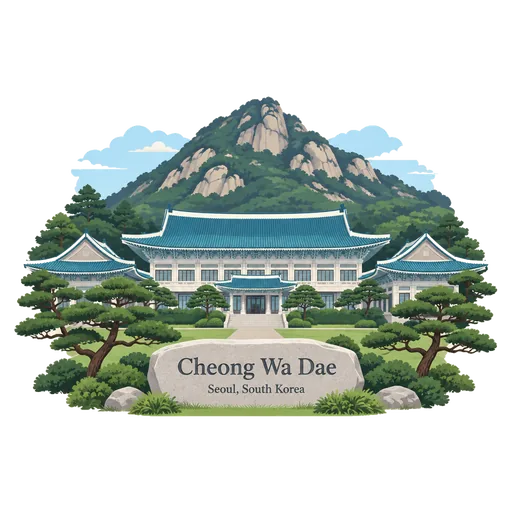
Cheong Wa Dae 49 km
Also called the Blue House, this is the former presidential office and residence in Seoul, set below Bugaksan behind Gyeongbokgung. Named for its blue roof tiles, it was opened to the public in 2022 and can now be toured on foot.

More famous places to visit in Gyeonggi
Questions
Where is Bridge of No Return?
Bridge of No Return is in Paju, Gyeonggi, South Korea. The nearest other LOQAH stamps are Joint Security Area (0.5 km), Dorasan Station (7.3 km), Ganghwa Island (34 km).
How do I get the Bridge of No Return stamp?
Open LOQAH when you are at Bridge of No Return and get its stamp. The app checks where you are once, at that moment, and the stamp goes into your Gyeonggi volume, confirmed on site, with the date.
I have been to Bridge of No Return before. Can I still have the stamp?
Yes. Add it from Earlier trips in your Gyeonggi volume, with the date if you know it, or import your Google Timeline and LOQAH matches the places you were.
Collect your first stamp.
LOQAH is free on iPhone and Android, in India and 40 more countries, with more countries on the way. Stand at a place, collect its stamp, and keep every trip in a passport that grows.