
Places to visit in Siem Reap, Cambodia
49 places to visit in Siem Reap, Cambodia, each with LOQAH's carefully crafted stamp of its own: Angkor Thom, Angkor Wat, Banteay Kdei and more. Stand at any of them with the app open and the stamp is yours, confirmed on site, in your Siem Reap volume.
28 UNESCO World Heritage sites · 2 Heritage sites · 19 Hidden gems
UNESCO World Heritage sites in Siem Reap (28)
-
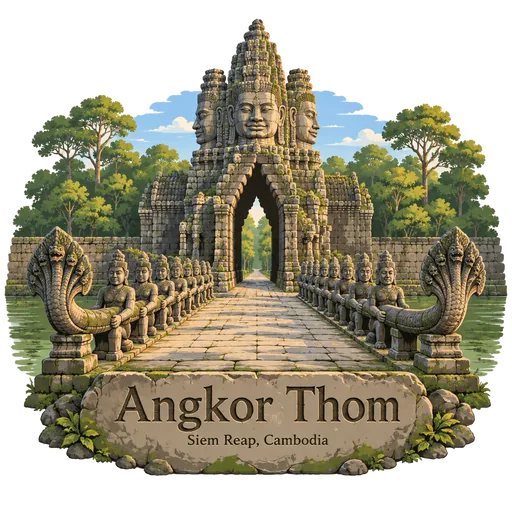
Angkor Thom
The last and longest lasting capital of the Khmer Empire, a walled royal city founded in the late 12th century by Jayavarman VII. Five gates lined with stone figures lead into the city, which holds the Bayon, Baphuon and the royal terraces.
-
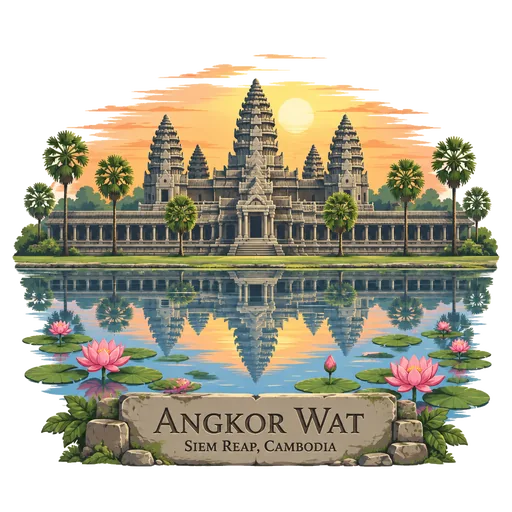
Angkor Wat
A temple complex near Siem Reap, built in the early 12th century by King Suryavarman II as a Hindu temple to Vishnu and later used as a Buddhist temple. Its five lotus shaped towers and miles of carved bas reliefs make it the largest religious monument in the world.
-
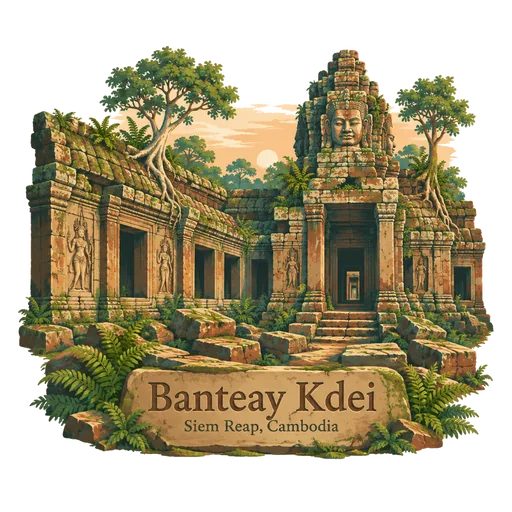
Banteay Kdei
A Buddhist temple southeast of Ta Prohm, built mostly in the late 12th century under Jayavarman VII. Its name means Citadel of Monks' Cells, and its mazelike galleries are partly ruined and overgrown.
-
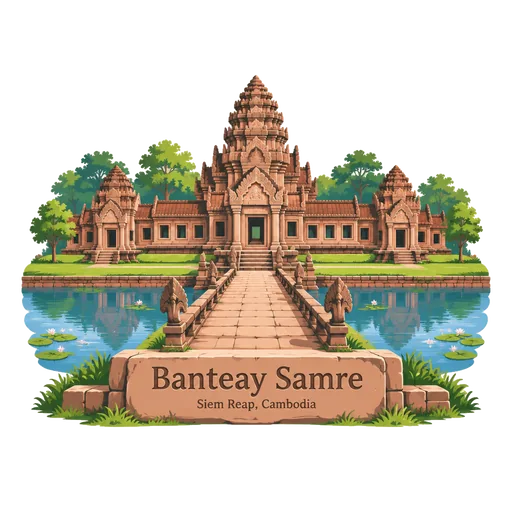
Banteay Samre
A temple east of the East Baray, built in the reign of Suryavarman II in the style of Angkor Wat. It is compact and well preserved, with a moat around the central sanctuary.
-
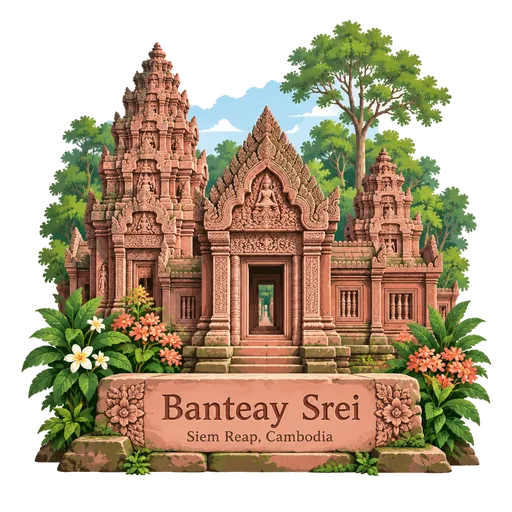
Banteay Srei
A small 10th century temple dedicated to Shiva and Parvati, about 25 kilometres from the main Angkor group. It is built of pink sandstone and is famous for the depth and fineness of its carved decoration.
-
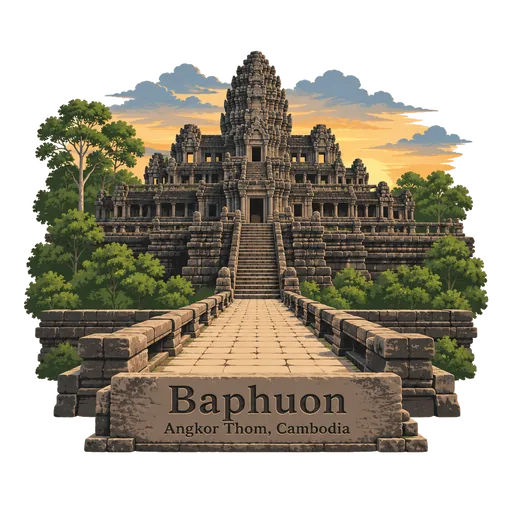
Baphuon
A temple mountain in Angkor Thom, built in the 11th century and dedicated to Shiva. It was taken apart stone by stone for restoration, a long project interrupted by civil war, and reopened to visitors in 2011.
-
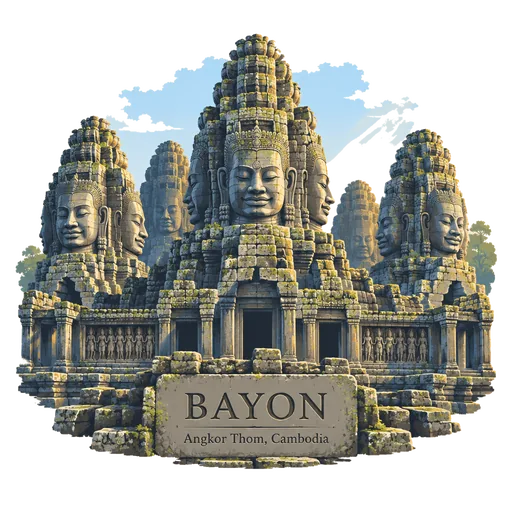
Bayon
A Buddhist temple at the centre of Angkor Thom, built in the late 12th or early 13th century under King Jayavarman VII. It is known for its many towers carved with huge smiling faces and for its detailed bas reliefs of daily life and battles.
-
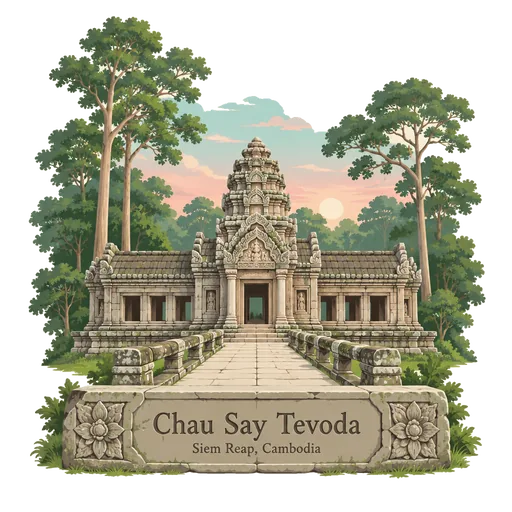
Chau Say Tevoda
A small Hindu temple just east of Angkor Thom, facing Thommanon across the Victory Way. It was built in the mid 12th century, in the Angkor Wat period, and its carved lintels and pediments survive well after years of careful restoration.
-
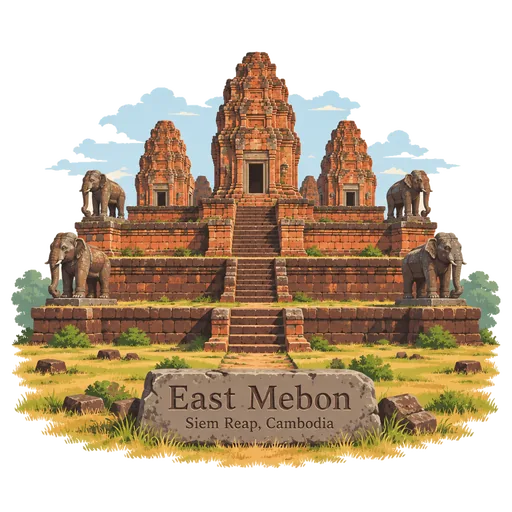
East Mebon
A 10th century temple built under Rajendravarman on an artificial island in the middle of the East Baray. The baray is now dry, but stone elephants still stand at the corners of its tiers.
-
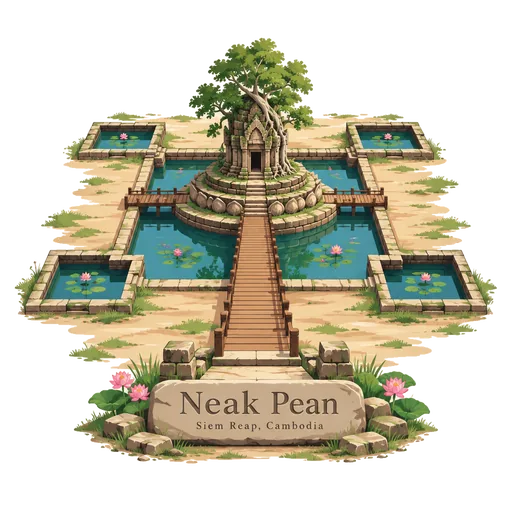
Neak Pean
A Buddhist temple on a circular island in the Jayatataka Baray, built in the 12th century by Jayavarman VII. A small shrine stands at the centre of a pool surrounded by four smaller pools, reached by a wooden causeway.
-
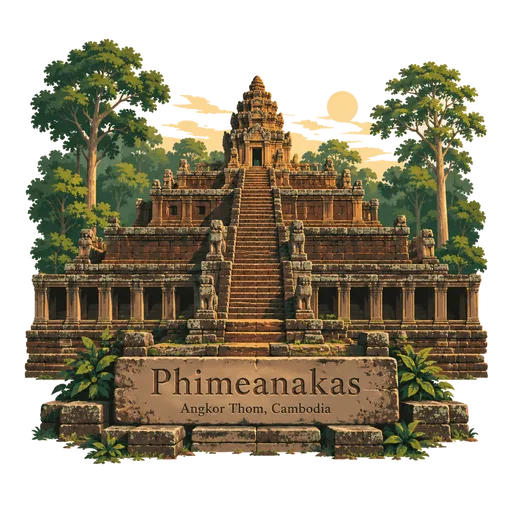
Phimeanakas
A Hindu temple in the former royal palace enclosure of Angkor Thom, built at the end of the 10th century in the Khleang style. Its three tiered laterite and sandstone pyramid once carried a golden tower.
-
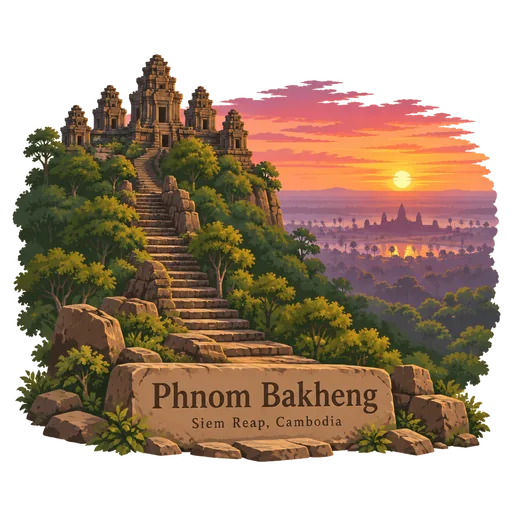
Phnom Bakheng
A temple mountain on a hill between Angkor Wat and Angkor Thom, built around the end of the 9th century and first dedicated to Shiva. It is a popular place to climb for views over the Angkor plain at sunset.
-
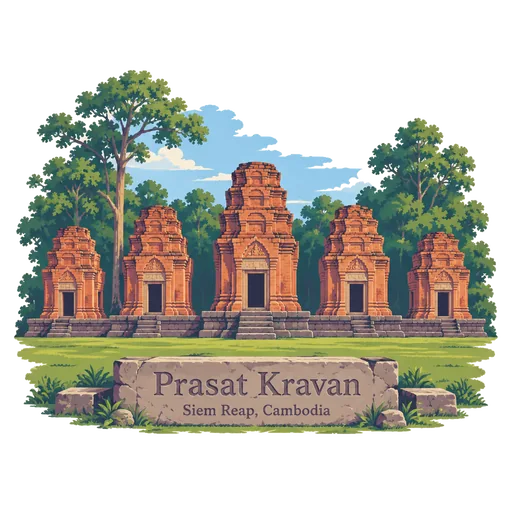
Prasat Kravan
A small 10th century temple of five reddish brick towers on a shared terrace, south of Srah Srang. Its inner walls hold rare brick carvings of Vishnu. It is one of the smaller monuments in the Angkor group and takes only a few minutes to see.
-
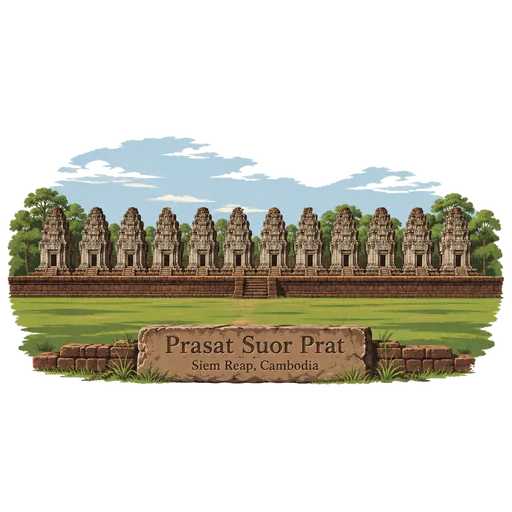
Prasat Suor Prat
A row of twelve towers lined from north to south along the eastern side of the royal square in Angkor Thom, facing the Terrace of the Elephants. The towers are built of rugged laterite and sandstone, and they are often described as having been used for ceremonies at the royal court.
-
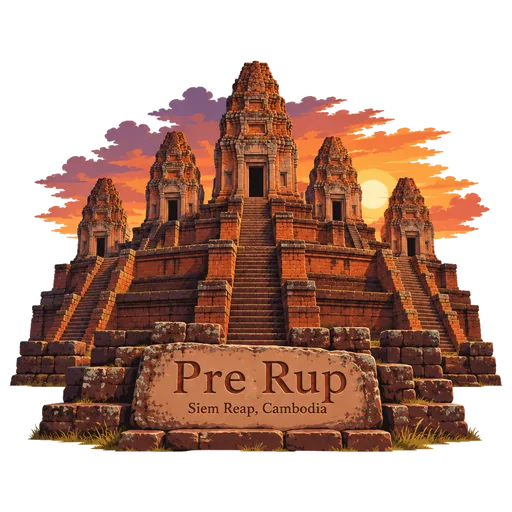
Pre Rup
A Hindu temple mountain built in 961 or 962 as the state temple of King Rajendravarman. Its steep laterite and brick tiers and five towers make it a favourite place to watch the evening light.
-
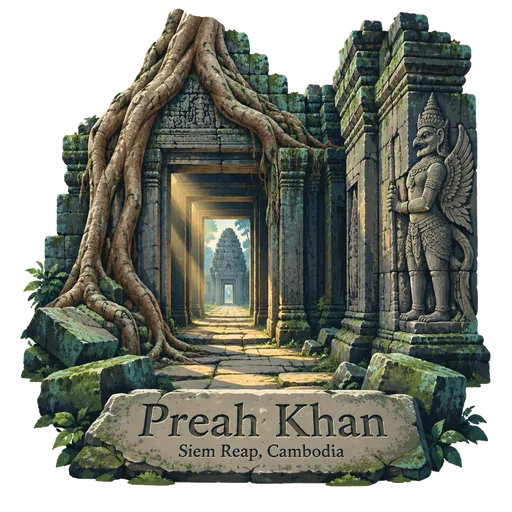
Preah Khan
A large Buddhist temple northeast of Angkor Thom, built in the 12th century by Jayavarman VII in honour of his father. Long corridors, carved doorways and trees growing among the stones give it an atmosphere similar to Ta Prohm.
-
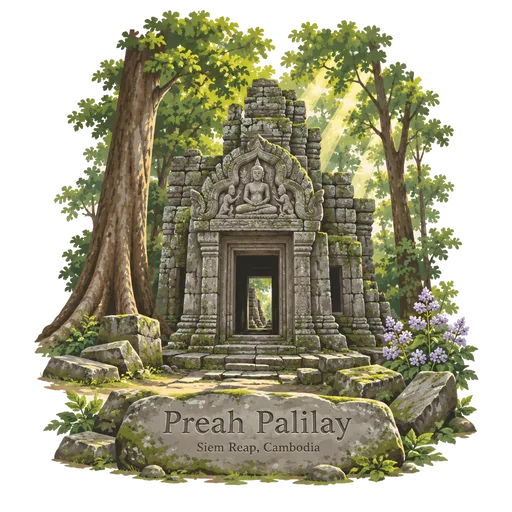
Preah Palilay
A small Buddhist sanctuary in the wooded area of Angkor Thom, about 400 metres north west of Phimeanakas and north of the Royal Palace. It has carved pediments that show scenes from the life of the Buddha, set in a quiet and shady clearing.
-
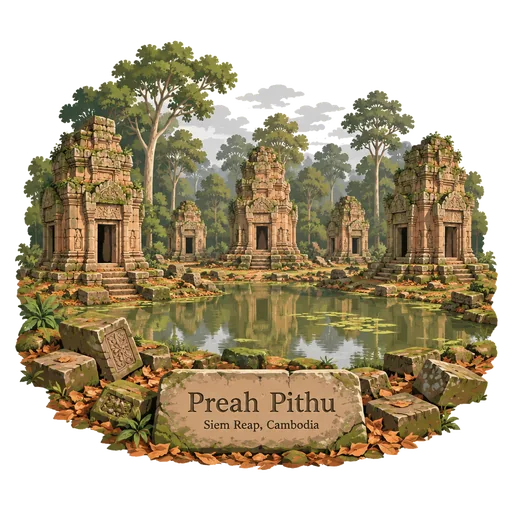
Preah Pithu
A group of five temples in Angkor, close to the Royal Palace area of Angkor Thom. They were probably not designed as a single group, but despite their ruined state they keep good decorative carving, and the wooded setting is peaceful.
-
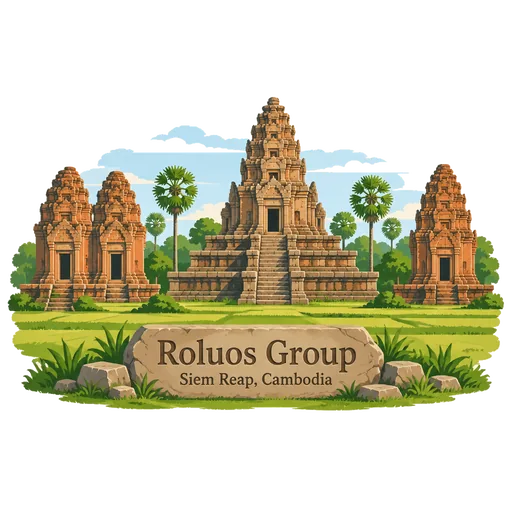
Roluos Group
The ruins of Hariharalaya, the first capital of the Khmer Empire, about 13 kilometres east of Siem Reap. Preah Ko, Bakong and Lolei date from the late 9th century and mark the start of Angkorian temple building.
-
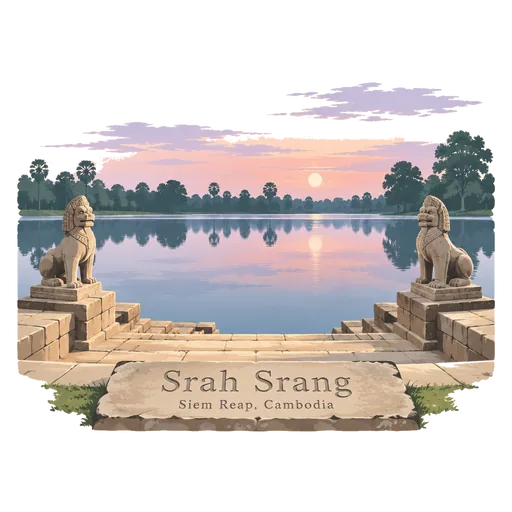
Srah Srang
A rectangular reservoir at Angkor, just east of Banteay Kdei, dug in the 10th century and enlarged under Jayavarman VII. Its sandstone landing stage on the edge of the water is a quiet spot for sunrise.
-
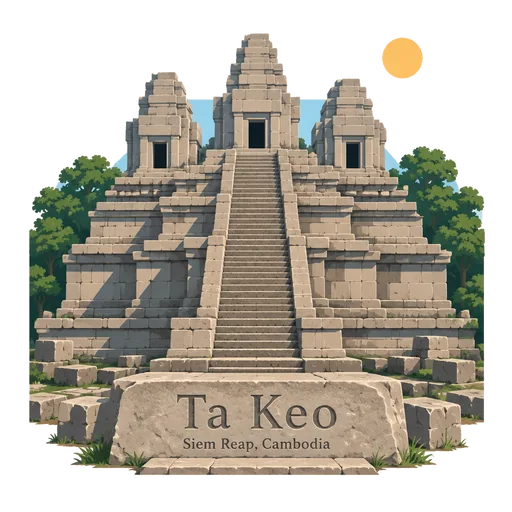
Ta Keo
A temple mountain east of Angkor Thom, probably the first at Angkor built wholly of sandstone. Work began around the year 1000 and was never completed, so its tall towers stand bare of carving.
-
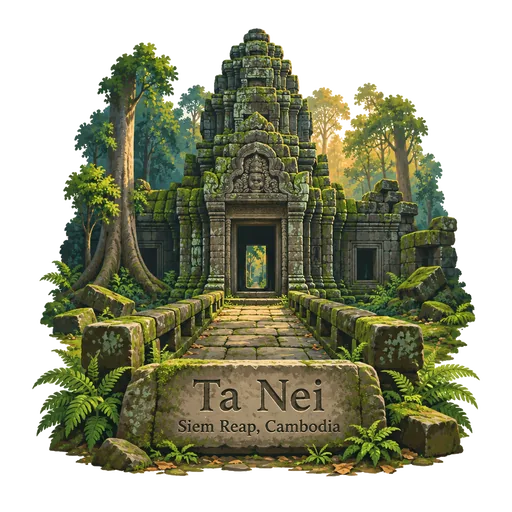
Ta Nei
A late 12th century stone temple near the northwest corner of the East Baray, the large holy reservoir of Angkor. It was built under King Jayavarman VII and sits on a quiet forest path, with moss covered towers that few tour groups reach.
-
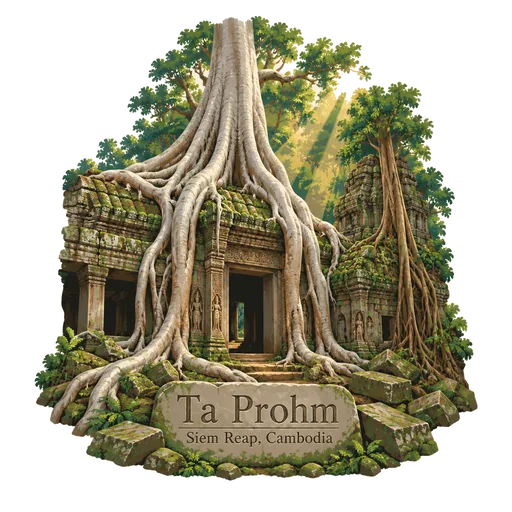
Ta Prohm
A temple about one kilometre east of Angkor Thom, built in the late 12th century as a Buddhist monastery. It has been left largely as it was found, with huge silk cotton and strangler fig trees growing over its galleries and towers.
-
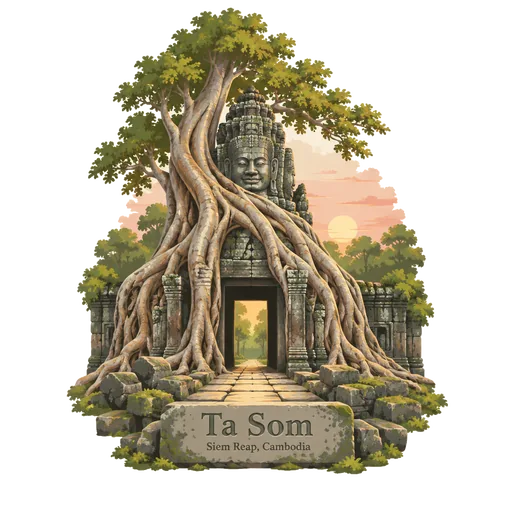
Ta Som
A small Buddhist temple northeast of Angkor Thom, built at the end of the 12th century for Jayavarman VII. Its eastern gateway is famously held in the roots of a giant tree.
-
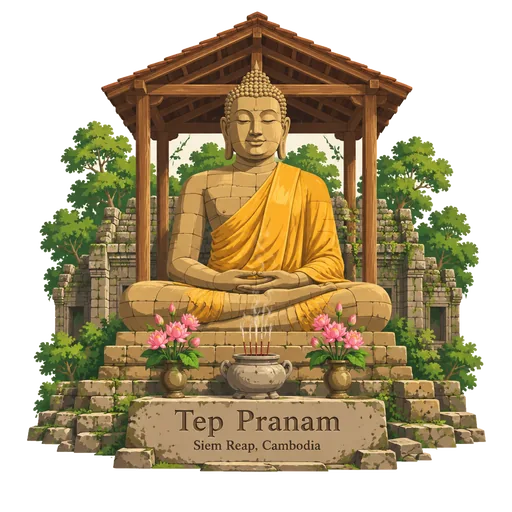
Tep Pranam
A temple in Angkor Thom that holds a giant seated Buddha built from sandstone blocks, and the figure is still worshipped today. The body reuses many older stones, while the head appears to be somewhat later.
-
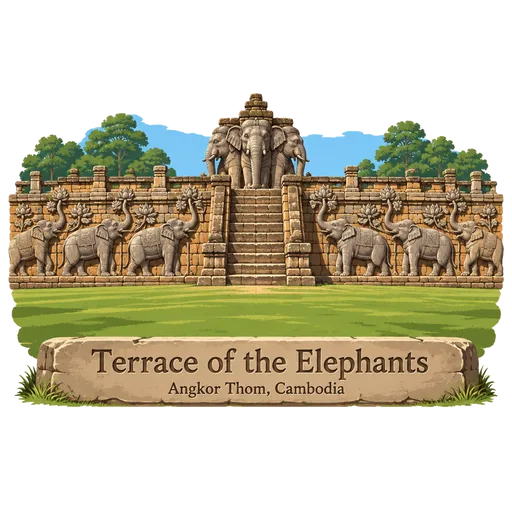
Terrace of the Elephants
A long terrace in Angkor Thom that faced the Royal Square, used by the king to view parades and ceremonies. Its retaining wall is carved with life sized elephants, garudas and lions.
-
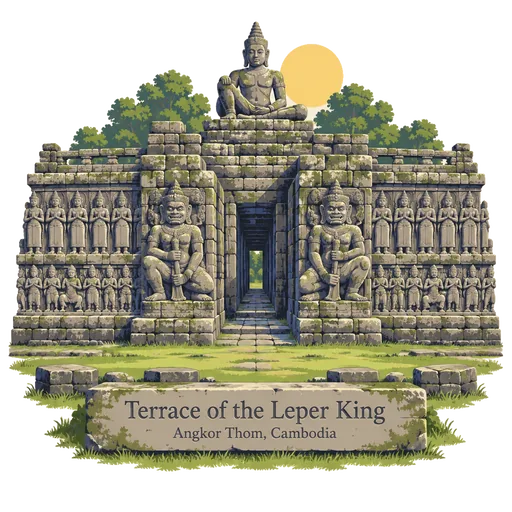
Terrace of the Leper King
A raised terrace in the northwest corner of the Royal Square of Angkor Thom, topped by a seated statue. Its walls are carved with several layers of figures, and the statue is thought to represent Yama, the god of death.
-
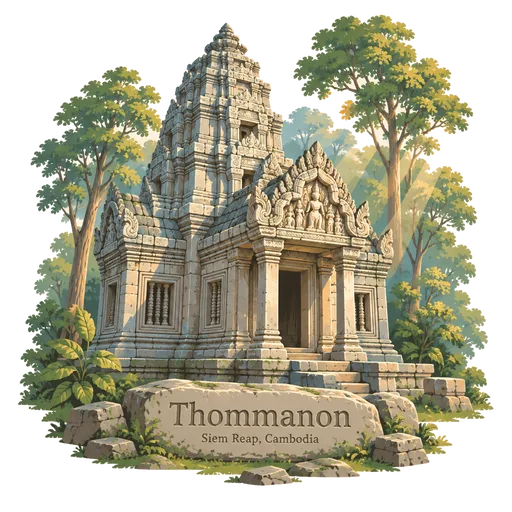
Thommanon
A small Hindu temple east of Angkor Thom, one of a pair with Chau Say Tevoda, built in the reign of Suryavarman II. It is admired for its graceful proportions and well preserved carvings.
Heritage sites in Siem Reap (2)
-
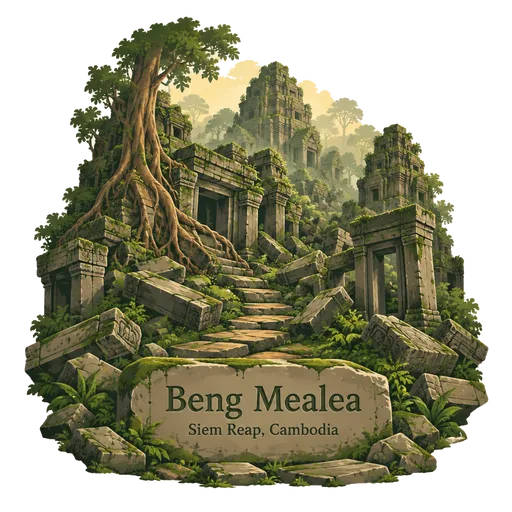
Beng Mealea
A temple from the Angkor Wat period about 40 kilometres east of the main group, built of sandstone in the early 12th century. It is largely unrestored, and visitors climb over fallen towers in a jungle setting.
-
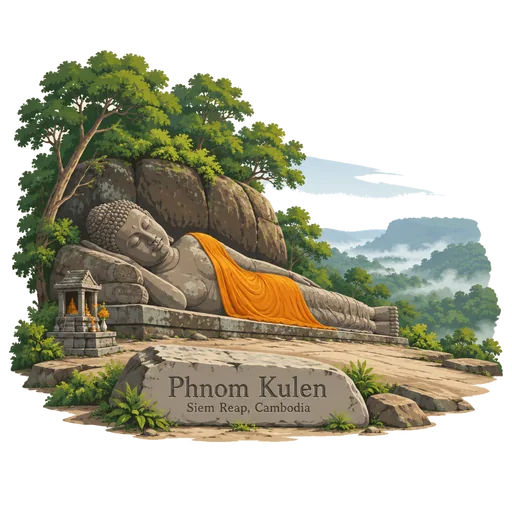
Phnom Kulen
A sandstone plateau northeast of Siem Reap, regarded as a holy mountain and the place where Jayavarman II proclaimed the Khmer Empire in 802. It has a large reclining Buddha, a river with carved lingas and a popular waterfall.
Hidden gems in Siem Reap (19)
-
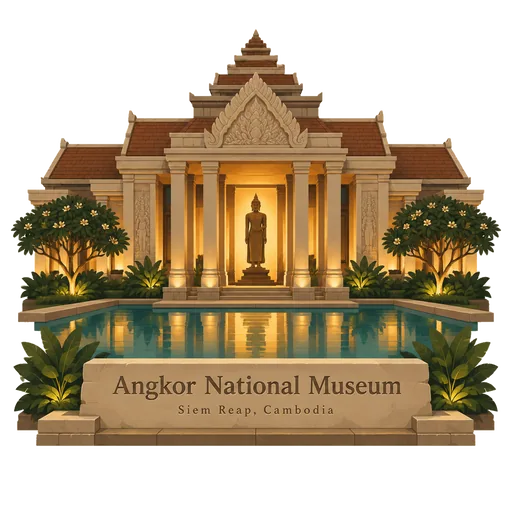
Angkor National Museum
An archaeological museum in Siem Reap showing Angkorian artefacts and the history of the Khmer Empire. Its galleries hold Buddha images, Hindu sculptures and displays on the Angkor temples. It also has a gallery on the Khmer Empire and is a useful introduction before visiting the temples.
-
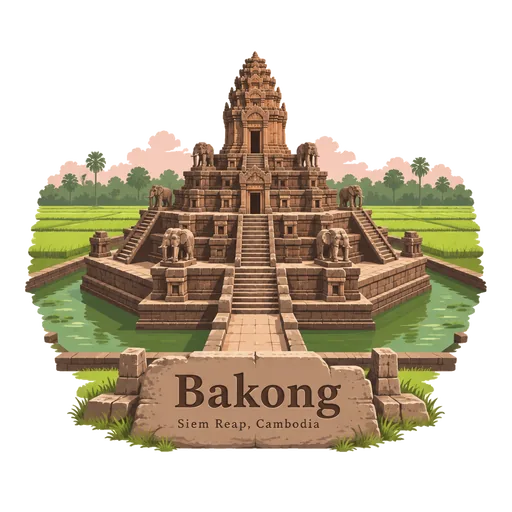
Bakong
The earliest large sandstone temple mountain of the Khmer Empire, built in the late 9th century at Roluos. Five stepped tiers rise to a central tower and are guarded by stone elephants.
-
Cambodia Landmine Museum
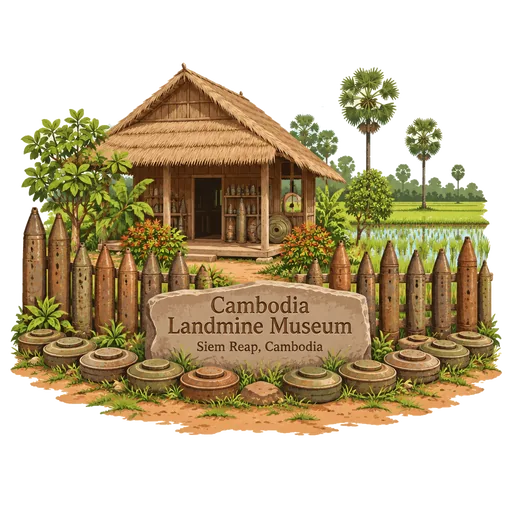
A museum in Siem Reap province that tells the story of landmines and unexploded ordnance left by decades of war. It also works as an education centre, and the money it raises goes to clearance work and to schooling for children and villagers.
-
Kbal Spean
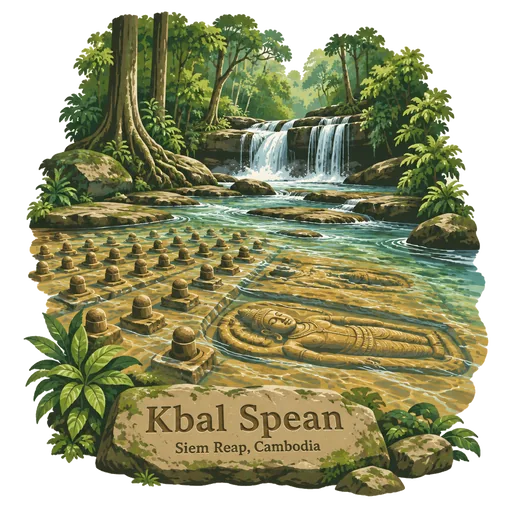
A riverbed in the Kulen hills northeast of Angkor carved in the 11th century with hundreds of linga and images of Hindu gods. It is known as the River of a Thousand Lingas and is reached by a forest walk.
-
Lolei
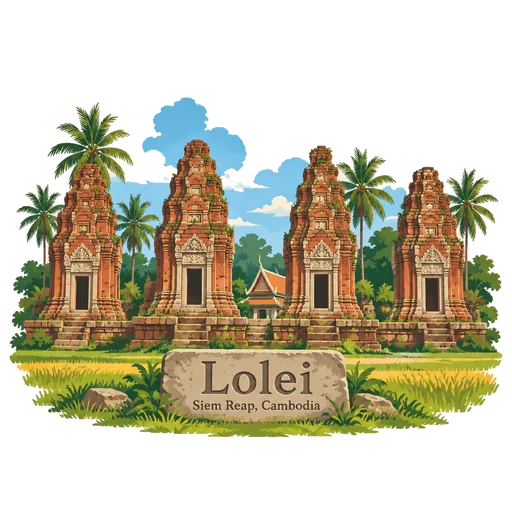
The northernmost of the Roluos group of 9th century temples, built on an island in a baray that is now dry. Four brick towers stand in a row, with Sanskrit inscriptions on their doorposts.
-
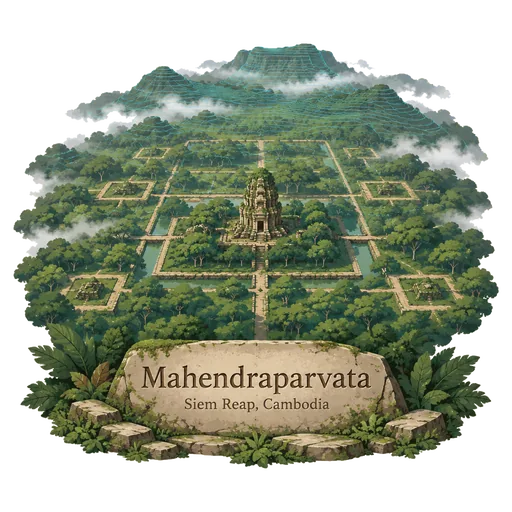
Mahendraparvata
A lost city of the early Khmer Empire on Phnom Kulen, founded by Jayavarman II around 802. Airborne laser surveys in 2012 revealed its street grid and temples beneath the forest. Its remains are spread over a wide area of forest on the plateau.
-
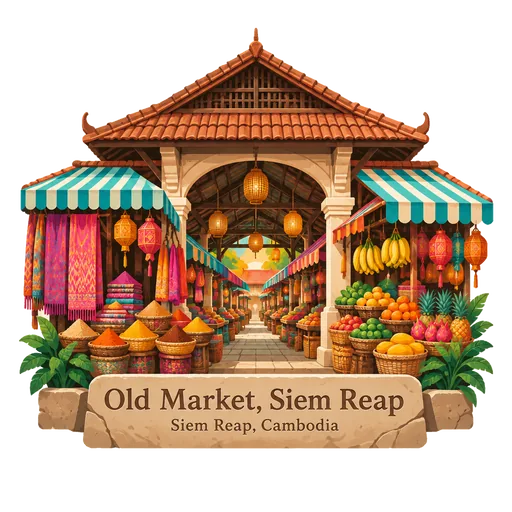
Old Market, Siem Reap
The main market in the south of central Siem Reap, known in Khmer as Psah Chas. Stalls sell fresh produce, spices, silk, souvenirs and street food, and it is a different place from the Old Market in Phnom Penh.
-
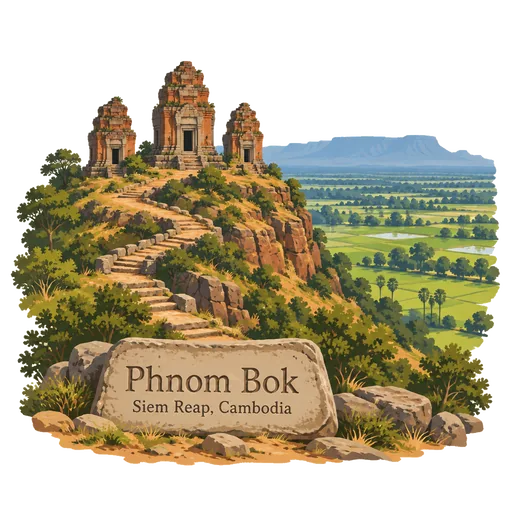
Phnom Bok
A hill northeast of the Eastern Baray with a Khmer temple on top. It is one of a trio of mountain temples with a similar layout, and a steep climb leads to a summit with long views across the plain towards Phnom Kulen.
-
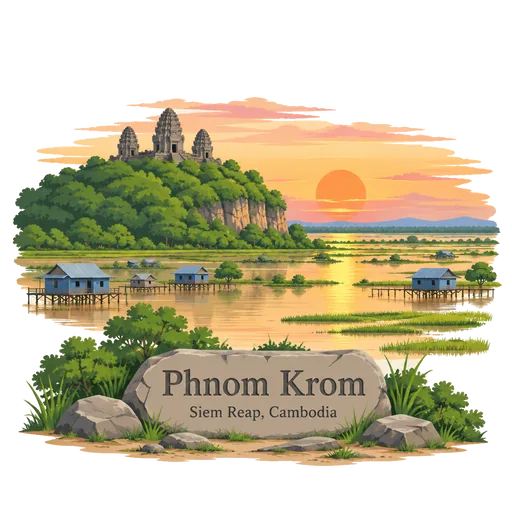
Phnom Krom
A hill about 140 metres high, close to Siem Reap city and the southern shore of the Tonle Sap lake. A temple called Prasat Phnom Krom stands on the summit, and it gives wide views over the lake, rice fields and floating villages.
-
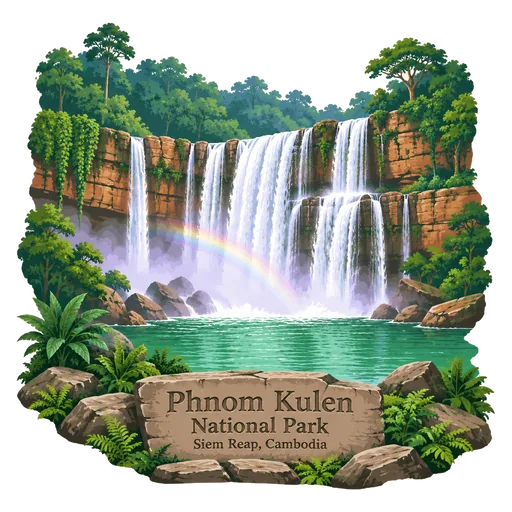
Phnom Kulen National Park
A national park on the Phnom Kulen plateau north of Angkor, established in 1993 and covering about 374 square kilometres. The Khmer Empire was founded on this mountain in 802, and it holds waterfalls, a reclining Buddha and carved riverbed lingas.
-
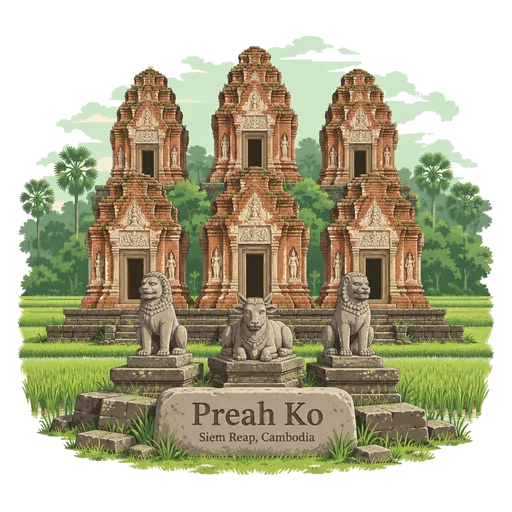
Preah Ko
The first temple built at Hariharalaya, dedicated in 879 by Indravarman I. Six brick towers stand on a low platform, with fine lintels and stucco decoration still visible. It lies about 15 kilometres southeast of the main Angkor group, close to Bakong and Lolei.
-
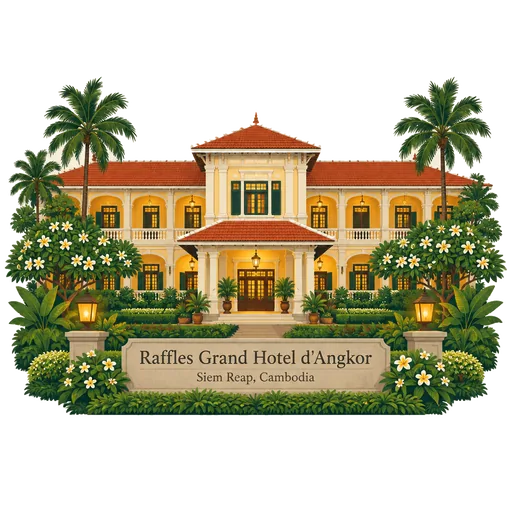
Raffles Grand Hotel d'Angkor
A historic hotel in Siem Reap, opened in 1932 and designed by the town planner Ernest Hebrard. It has long been the best known place to stay near Angkor. It has remained in use as a hotel through French rule, civil war and later restoration.
-
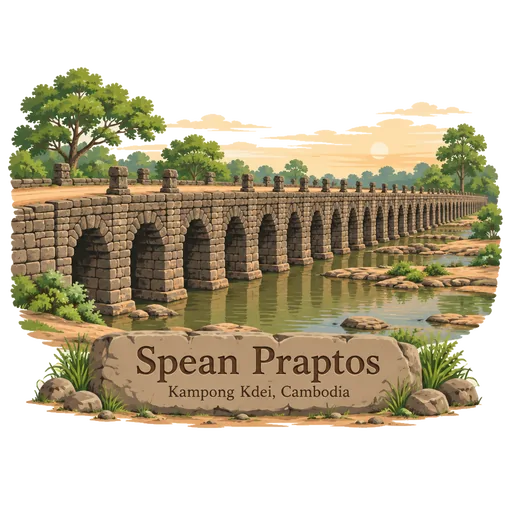
Spean Praptos
A Khmer stone bridge of more than twenty narrow corbelled arches on the old road from Angkor to Phnom Penh. It was once the longest corbelled stone bridge in the world and is still crossed on foot.
-
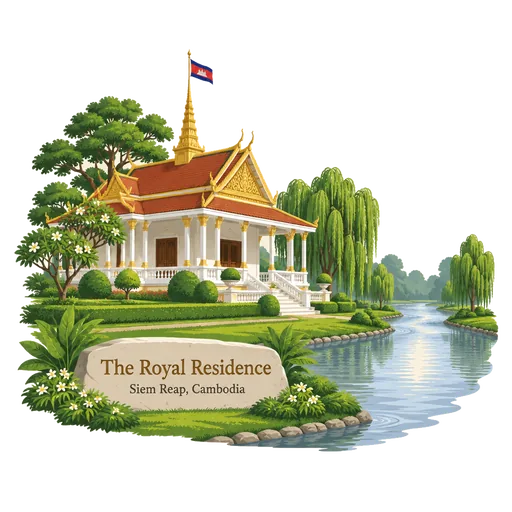
The Royal Residence
A royal villa in Siem Reap used as the official residence of the King of Cambodia when he visits the area. It stands in a garden near the Siem Reap River. It is a working royal property rather than a regular sight, so access is limited.
-
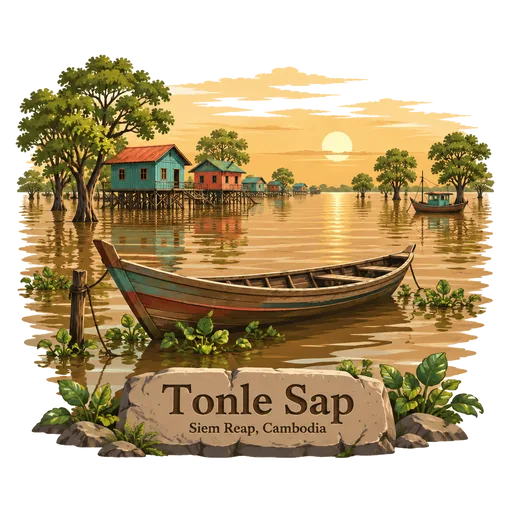
Tonle Sap
The largest freshwater lake in Southeast Asia, in central Cambodia. Its size changes greatly with the seasons because the Tonle Sap River reverses its flow in the rainy season, and floating villages sit on its waters.
-
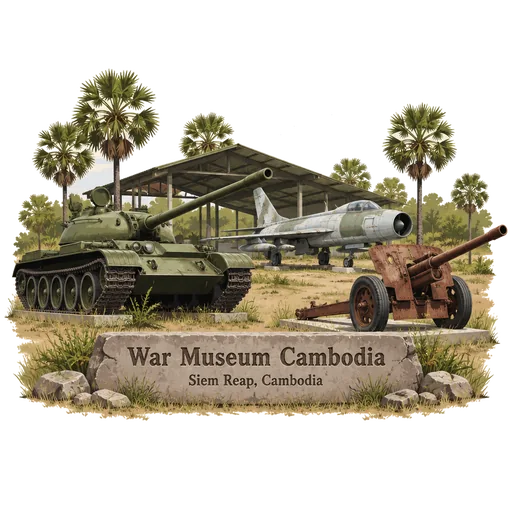
War Museum Cambodia
An open air museum near Siem Reap with military equipment from Cambodia's decades of conflict, including tanks, artillery and aircraft. Former soldiers often act as guides. Its exhibits show the weapons used across the long years of fighting.
-
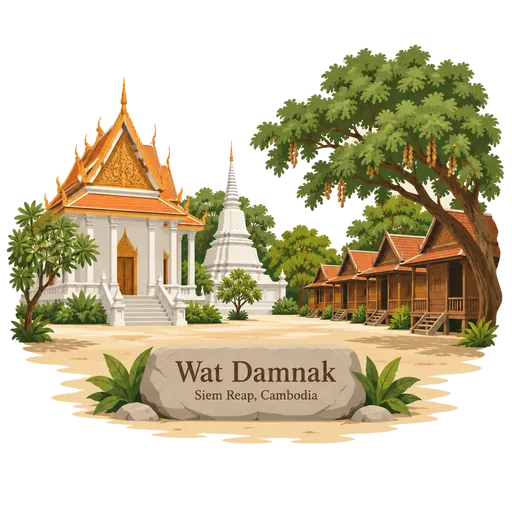
Wat Damnak
A Buddhist pagoda in the city of Siem Reap, and one of the teaching monasteries of the town. Monks live and study in the compound, which sits in a quiet part of the city a short walk from the river.
-
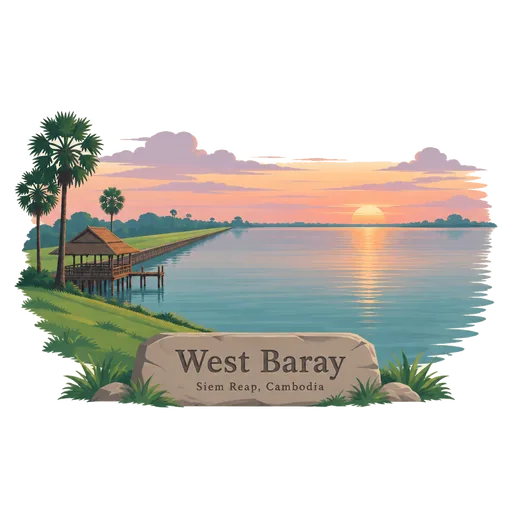
West Baray
A huge reservoir west of Angkor Thom, about eight kilometres long and two wide, dug in the 11th century. It still holds water and is a local spot for picnics and swimming.
-
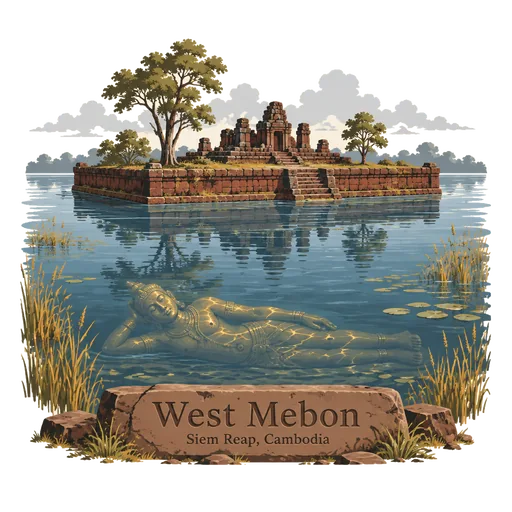
West Mebon
A temple on an island in the centre of the West Baray, the largest reservoir at Angkor. A huge bronze reclining Vishnu was found here, and fragments are kept in the National Museum in Phnom Penh.
Collecting in Siem Reap
What are the best places to visit in Siem Reap?
LOQAH lists 49 places in Siem Reap. The best known include Angkor Thom, Angkor Wat, Banteay Kdei, Banteay Samre and Banteay Srei. Each has a stamp of its own to collect when you are there.
How many LOQAH stamps are there in Siem Reap?
49, and more are added over time. Each place has LOQAH's carefully crafted stamp of its own.
How do I collect a stamp in Siem Reap?
Open LOQAH at the place and get its stamp. LOQAH checks where you are once, at that moment; at the place itself the stamp is confirmed on site, with a gold badge.
I have been to places in Siem Reap before. Can I add them?
Yes. In Earlier trips, choose Siem Reap and swipe through its stamps, or import your Google Timeline. Each one goes into your volume with the date, if you know it.
More in Cambodia
Collect your first stamp.
LOQAH is free on iPhone and Android, in India and 40 more countries, with more countries on the way. Stand at a place, collect its stamp, and keep every trip in a passport that grows.